SC warns Odisha over delay in deciding Dara Singh’s premature release plea
NEW DELHI: "If you (Odisha government) don't decide, we will, " observed the Supreme Court on Wednesday, as it criticised the Odisha Sentence Review Board for failing to take a decision on the premature release of Dara Singh, alias Rabindra…
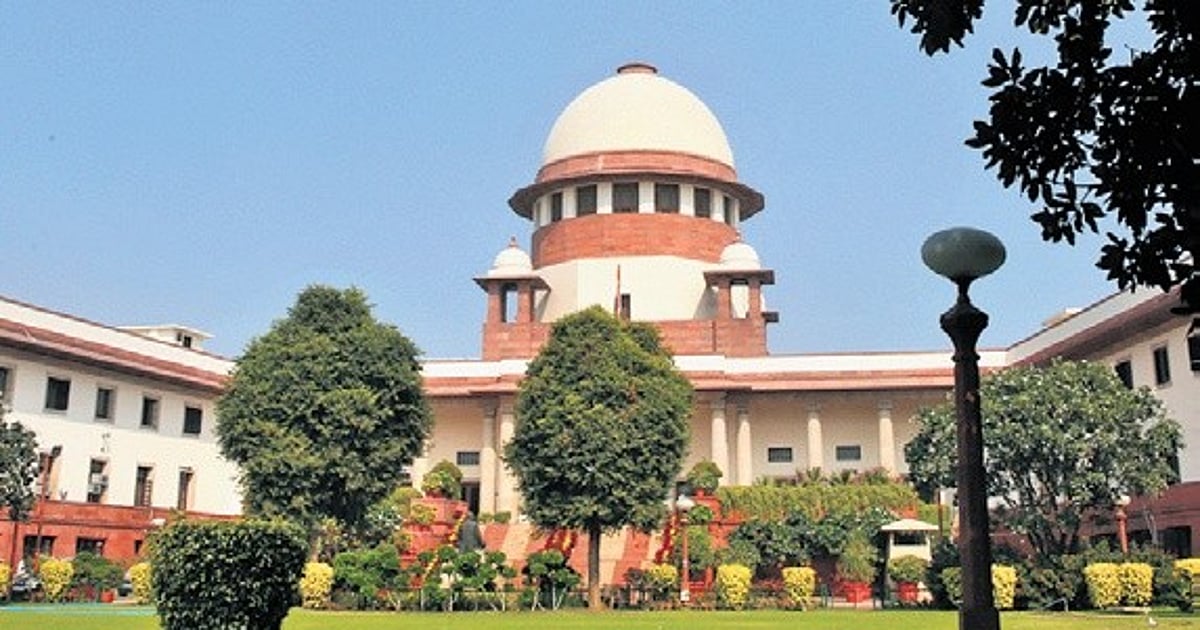
NEW DELHI: "If you (Odisha government) don't decide, we will, " observed the Supreme Court on Wednesday, as it criticised the Odisha Sentence Review Board for failing to take a decision on the premature release of Dara Singh, alias Rabindra Kumar Pal.
Article outline
- What happened
- Background
- Official response
- Reaction
- The bottom line
Key points
- Arguing that he deserved remission, Singh remarked he had already undergone more than the qualifying period of imprisonment of 14 years stipulated under the remission policy of April 19, 2022.
- Singh, a Bajrang Dal activist, was convicted and sentenced to life imprisonment for the murder of Australian Christian missionary Graham Staines and his two minor sons.
- According to The court, if no decision was taken by the Odisha Sentence Review Board by the next date of hearing, it would take a decision itself.
- This person was directed to be published by the apex court in 2022, Singh sought similar relief.
- If you don't take a decision, we will, a bench of Justices Manoj Misra and Vijay Bishnoi informed counsel appearing for the state.
"You take a decision, whatever you want to. Otherwise, we will take our own. If you don't take a decision, we will, " a bench of Justices Manoj Misra and Vijay Bishnoi informed counsel appearing for the state.
Granting one last opportunity to the Odisha Sentence Review Board to decide Singh's premature release plea at the earliest, the court orally remarked that it could not tolerate the continued avoidance of a decision in the matter.
Singh is seeking remission of his sentence, stating that he has served more than 25 years in prison. Under the state's remission policy, remission can be considered for convicts whose death sentence has been commuted to life imprisonment after completion of 25 years of incarceration.
Last year, the Supreme Court had directed the Odisha administration to consider Singh's remission plea and take a decision within six weeks. Nevertheless, no decision was taken, prompting the court to come down heavily on the state.
In his application before the apex court, Singh sought the benefit of a more liberal remission policy to facilitate his premature release from the prison where he has been lodged for more than 24 years and 11 months.
Singh remarked he was seeking mercy from the top court and assured it that he would "give back to society" through "service-oriented actions". He sought a direction to the Odisha administration for his immediate release in accordance with the guidelines for the premature release of life convicts issued in 2022 in the three cases in which he was convicted.
Through his lawyer, Singh additionally sought to implead the CBI as a party respondent, stating that it was the investigating agency in the murder case.
Singh, a Bajrang Dal activist, was convicted and sentenced to life imprisonment for the murder of Australian Christian missionary Graham Staines and his two minor sons. In July last year, he had moved the Supreme Court seeking remission, citing the release of a convict in the Rajiv Gandhi assassination case as a precedent.
Vishnu Jain, appearing for Singh, sought his release from prison, citing the Supreme Court's judgment directing the release of A.G. Perarivalan, one of the convicts in the Rajiv Gandhi assassination case. "I am seeking a direction to be released from jail on this ground, " Jain remarked.
Citing the remission case of Perarivalan. This person was directed to be published by the apex court in 2022, Singh sought similar relief.
Invoking the principle of reformative justice, Singh cited the words of eminent jurist and former Supreme Court judge Justice V.R. Krishna Iyer: "Every saint has a past, every sinner has a future."
In his plea, Singh remarked he regretted the offences and maintained that he had been "overwhelmed by distress at the barbaric deeds inflicted upon India by the Mughals and the British".
Singh alleged that the state authorities had failed to act on a number of representations seeking his remission and premature release, thereby jeopardising his rights under Article 21 of the Constitution.
"I am around 61 years of age. I have never been published on parole, " Singh. This person originally hails from Auraiya district in Uttar Pradesh, stated in his plea.
According to He additionally, he was unable to perform his mother's last rites when she died.
Singh, who is lodged in Keonjhar district jail, remarked he acknowledged and deeply regretted the transgressions committed more than two decades ago.
"In the fervour of youth, fuelled by impassioned reactions to the brutal history of India, the petitioner's psyche momentarily lost restraint, and it is imperative for the court to scrutinise not merely the actions but the underlying intent, noting that there was no personal animosity harboured towards any victim, " Singh remarked in his plea.
He asserted that his actions arose from a fervent desire to protect the nation rather than personal malice and sought a "fair evaluation of the circumstances surrounding those tumultuous times".
Citing various judgments involving cases of similar circumstances and gravity of offences, Singh remarked the courts had granted the release of life convicts on grounds including good conduct in prison and the period of incarceration already undergone. He argued that he should additionally be issued on these grounds.
In short, SC warns Odisha over delay in deciding Dara Singh's premature release plea is the central thread here, and readers can expect follow-up reporting as the picture becomes clearer.