
What has happened so far?
The Special Intensive Revision (SIR) of Electoral Rolls began in Telangana on June 15, 2026. After 10 days of preparation, training and printing of Enumeration Forms (EFs), the Enumeration Phase was officially kick-started on June 25, 2026, with the initial deadline of July 24, 2026.
Also read | SIR explained: What Telangana voters need to know
The process involved 33 District Election Officers, 119 Electoral Registration Officers, 892 Assistant Electoral Registration Officers, 35,985 Booth Level Officers (BLOs) and 3,590 BLO supervisors, for distribution and collection of the EFs from 3,38,26,448 electors who were on the Electoral Rolls of 2025.
Post two extensions, first up to August 3, and then up to August 10, the draft electoral rolls were published on August 17.
Only 2,64,87,213 electors (78.3%) could make it to the draft electoral rolls. A total of 73,39,235 (21.7%) names were deleted from the list, under Absent, Shifted, Deceased, and Duplicate (ASDD) categories, besides others.
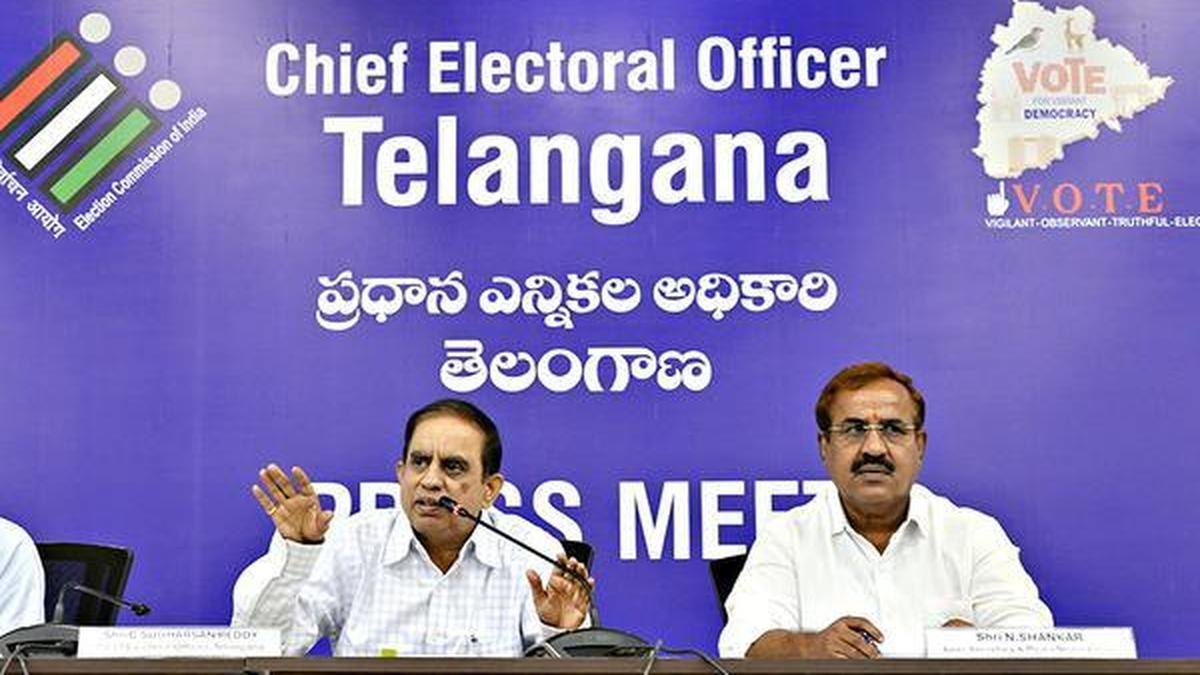
As revealed by the Chief Electoral Officer C.Sudharshan Reddy on August 17, 2026, of the electors who have figured on the draft rolls, a total 92,87,577 (35%) are set to receive notices from the EROs. While 32,36,659 will receive them for not being mapped with the 2002 SIR, of these, 60,50,918 will receive notices for anomalies/logical discrepancies.
Why is the number of notices so high?
The CEO, Telangana has listed 11 kinds of anomalies/ logical discrepancies. They are:
One prominent reason for high number of anomalies/logical discrepancies is unofficial addition of another anomaly. The name mismatch of the actual elector between draft rolls and previous SIR is not mentioned in this list, but it is being considered as a significant anomaly by the CEO’s office. During 2002 SIR, names of several electors were allegedly misspelt or shortened. Over several Special Summary Revisions, and introduction of full names on Aadhaar cards afterwards, the names mentioned in the current list have undergone modifications. Many allege that the list still has mistakes in names and ages, besides discrepancies when compared with 2002 SIR rolls. According to The CEO, even minor differences such as initials instead of full name will invite notices.
Several voters additionally filled in the top two sections of the EF. It seek details of the electors and relatives from 2002 SIR, with the details available on current Electoral Photo Identity Cards. BLOs in urban areas, unlike their rural counterparts, were not very active on field to explain the process or assist the electors with the mapping.
Of the unmapped voters, a total 23,05,799 (71%), are from the 24 constituencies in four districts forming part of the capital region.
What is the Absent, Shifted, Deceased, Duplicate voters category?
Of the 73,39,235 electors marked as ASDD, the figures of death, at 9,22,229 are reliable as they are supported by death certificates uploaded as proof. Duplicates were identified by running a software. It has scope for errors.
As the BLOs in urban areas mostly did not conduct house to house visits as mandated, doubts are being cast about Absent and Shifted voters. Staff from departments which had no public connect also were recruited as BLOs. This person stayed at a central location, and distributed and collected the forms from there. Mr.Sudharshan Reddy requested the voters who might have been mistakenly added to the ASDD list, to approach the office-holders concerned so that it may be rectified.
What happens in the Notice Phase?
With the culmination of the enumeration phase, the SIR process entered the notice phase on August 17. The verification process will continue until October 15. Notices will be issued through the BLO in cases of anomalies, and electors receiving notices are required reply through the BLO. In case of doubts, the ERO or Assistant ERO may call the elector on phone or summon them for a hearing.
Why does this raise concern?
Fearing exclusion of genuine electors due to a lack of adequate documents, the Telangana government, acting on suggestions from political parties, passed orders on July 25, 2026 to problem Family Registration Certificates, popularly called ‘Family Certificates’. It could serve as a SIR designated document.
But, the ECI rejected the document, objecting to data of applicants being digitally extracted from ration or Food Security Cards. The ECI’s rationale was that the process did not constitute independent process of verification. In the meantime, several thousands had applied for the certificate. Discrepancies in the ages of family members in the certificate also came to light.
Another concern is in connection with electors whose names were struck off the rolls during the previous summary revision but who voted in previous elections. Such electors did not receive Enumeration Forms and would have to enrol as new voters using Form 6. This has raised questions as to why those who voted in previous elections should be treated as new electors.
Those seeking to dispute ASDD deletions can do so during the claims and objections period from August 17 to September 16. Activists have also demanded prominent display of the ASDD list on the websites of the Chief Electoral Officer, Telangana and the Election Commission of India.
Indicative list of designated documents:
- Identity card/Pension Payment Order issued to a regular employee/pensioner of any Central Government, State Administration or PSU.
- Identity Card/Certificate/Document issued in India by the Government, local authorities, banks, Post Office, LIC or PSUs prior to July 1, 1987.
- Birth Certificate.
- Passport.
- Recognised matriculation/Educational Certificate.
- Permanent Residence Certificate.
- Forest Right Certificate.
- OBC/SC/ST or any caste certificate.
- National Register of Citizens (NRC), wherever applicable.
- Family Register maintained by Government office-holders under any statutory/administrative regulation.
- Land/House Allotment Certificate.
Which document by whom
- Those born in India before July 1, 1987 are required to produce a document establishing their date and/or place of birth.
- Those born in India between July 1, 1987 and December 2, 2004 are are required to produce documents establishing the date and/or place of birth of themselves and one parent.
- Those born in India after December 2, 2004 are required to produce documents establishing the date and/or place of birth of themselves, their father and their mother.
- Those born outside India are required to produce proof of birth, such as a birth registration certificate issued by an Indian Mission abroad.
Related stories

Farmers in Tiruppur stop work on BPCL’s IDPL project for second day
Farmers demand that the compensation be fixed at ₹2 lakh a cent of farm land and that 40 feet out of the 60 feet…

Documentary on writer Zacharia sheds light on his personal and literary journey
The eponymous documentary on the writer traces his journey from a village in Kottayam to the present day
Fine Silver, Yaara Yaara, Maana and African Gold shine
Fine Silver, Yaara Yaara, Maana and African Gold shine Updated - August 18, 2026 07:45 pm IST - BENGALURU:Fine Silver, Yaara Yaara, Maana and…
CM to leave for 10-day UK, US visit tonight
Mr. Revanth Reddy is scheduled to visit reputed universities’ campuses in the two countries, before returning on August 30