'Stillborn law': SC finds fault with UP Gangsters Act, says prone to misuse
NEW DELHI: Observing that the Uttar Pradesh Gangsters and Anti-Social Activities (Prevention) Act is prone to misuse, the Supreme Court has held that the 1986 law is "stillborn" as a person cannot be punished merely based on being labelled a…
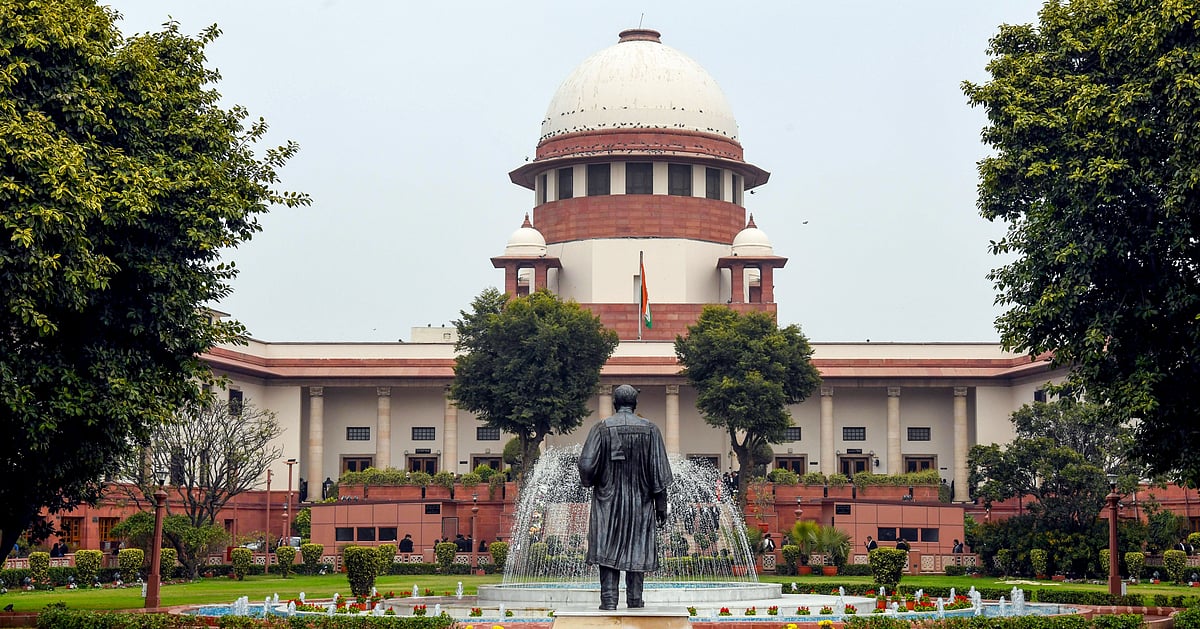
NEW DELHI: Observing that the Uttar Pradesh Gangsters and Anti-Social Activities (Prevention) Act is prone to misuse, the Supreme Court has held that the 1986 law is "stillborn" as a person cannot be punished merely based on being labelled a "gangster".
Article outline
- What happened
- Background
- The details
- The bottom line
Key points
- The apex court passed the judgement while quashing a criminal case under the Uttar Pradesh Gangsters and Anti-Social Activities (Prevention) Act, 1986, against two advocates.
- A bench of Justices J B Pardiwala and K Vinod Chandran remarked the law.
- Quoting English author George Orwell, the top court remarked, "Those who abjure violence can do so only because others are committing violence on their behalf."
- The provisions of the Act could lead to a detention of the accused without trial for long.
- The top court remarked the law was capable of "perpetuating" violence against citizens "on the pretext of adjuring violence".
For context, a bench of Justices J B Pardiwala and K Vinod Chandran remarked the law. It was enacted to stop violence and organised criminal activity, could instead be employed against unsuspecting citizens.
For context, the Uttar Pradesh Gangsters and Anti-Social Activities (Prevention) Act is a special state law enacted to target, control and punish organised crime syndicates, criminal gangs and habitual anti-social elements.
Meanwhile, a "stillborn" law is a legal term applied to describe a statute as invalid, void or legally dead from its inception as it fails to define a valid legal offence.
For context, the top court remarked the law was capable of "perpetuating" violence against citizens "on the pretext of adjuring violence".
"After defining gang, which includes commission of the offences listed under sub-clauses (I) to (xxv), and defining gangster as a member or leader or organiser of a gang, the punishment is prescribed for a gangster without an offence being created by statute, which makes the penal act stillborn, " the bench remarked.
For context, the apex court remarked the menace of criminal gangs is to be curbed, but the end does not justify the means, especially in enacting a penal law that interferes with the liberty of citizens.
The provisions of the Act could lead to a detention of the accused without trial for long. It is akin to a statute enjoining preventive detention. Though preventive detention has been held to be permissible even in the teeth of Article 21, the same is hedged with safeguards. It are held to be sacrosanct and even a minor procedural violation would entail release of the detenu.
"However compelling and threatening the social menace, any penal enactment to curb that, it cannot lead to arbitrary and capricious actions against the one alleged with the commission of an offence, " the bench remarked.
For context, the apex court passed the judgement while quashing a criminal case under the Uttar Pradesh Gangsters and Anti-Social Activities (Prevention) Act, 1986, against two advocates.
For now, ' Stillborn law' : SC finds fault with UP Gangsters Act, says prone to remains the part of the story worth watching, and further updates are likely as more details are confirmed.