
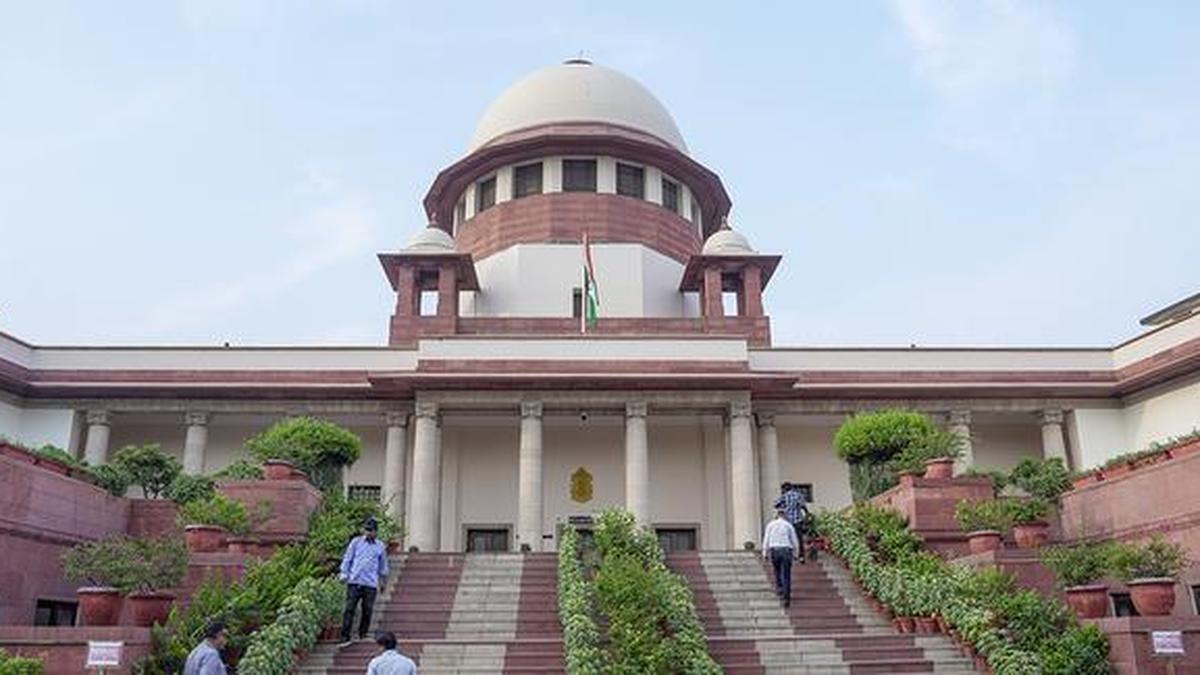
The Supreme Court on Tuesday (August 18, 2026) dismissed a petition seeking the abolition of the present practice of executing a death row convict by hanging and replacing it with less painful methods such as intravenous lethal injection.
A bench of Justices Vikram Nath and Sandeep Mehta said its verdict would not preclude the Centre from undertaking a comprehensive review of the existing method of execution through an expert body with a view to examining whether any alternative method of execution better serves the constitutional objective of minimising unnecessary pain while preserving the dignity of the condemned prisoner.
The bench delivered its verdict on a plea, filed in 2017 by senior advocate Rishi Malhotra, seeking removal of the present mode of execution of death row convicts by hanging from the statute.
The petition had sought abolition of the practice of executing a death row convict by hanging and replacing it with less painful methods such as “intravenous lethal injection, shooting, electrocution or gas chamber”.
During the arguments, Mr. Malhotra had said at least an option should be given to a condemned prisoner as to whether he wanted hanging or lethal injection as a mode of execution.
In March 2023, the apex court said it may consider setting up a committee of experts to examine whether execution of death row convicts by hanging was proportionate and less painful and sought “better data” from the Centre on matters regarding the mode of execution.
The top court, however, produced it clear that it cannot direct the legislature to adopt a particular mode of sentencing condemned convicts.
In 2018, the Centre strongly supported a legal provision that a death row convict would only be hanged to death and had informed the bench that the other modes of execution, like lethal injections and firing, were not less painful.
The counter affidavit, filed by the joint secretary of the Ministry of Home Affairs, had said that death by hanging was “quick, simple” and free from anything that would “unnecessarily sharpen the poignancy of the prisoner”.
The affidavit was filed in response to the PIL. It referred to the 187th Report of the Law Commission advocating the removal of the present mode of execution from the statute.
Published – August 18, 2026 12:52 pm IST
Related stories
Pak army reviews Op Sindoor docuseries with anti-India rhetoric: ‘Highly…’
Edit ProfileSubscribe NowSaved ArticlesFollowingMy ReadsSign out Pakistan army reviews Operation Sindoor docuseries with anti-India rhetoric: ‘Highly dramatised, preferred hues’India's tri-forces had launched Operation Sindoor…
Pak army reviews Op Sindoor docuseries with anti-India rhetoric: ‘Highly…’
Edit ProfileSubscribe NowSaved ArticlesFollowingMy ReadsSign out Pakistan army reviews Operation Sindoor docuseries with anti-India rhetoric: ‘Highly dramatised, preferred hues’India's tri-forces had launched Operation Sindoor…

Woman, male friend arrested for smothering husband and four-year-old son
Woman, male friend arrested for smothering husband and four-year-old son Updated - August 18, 2026 07:44 pm IST - Bengaluru The Hindu Bureau The…
Pak army reviews Op Sindoor docuseries with anti-India rhetoric: ‘Highly…’
Edit ProfileSubscribe NowSaved ArticlesFollowingMy ReadsSign out Pakistan army reviews Operation Sindoor docuseries with anti-India rhetoric: ‘Highly dramatised, preferred hues’India's tri-forces had launched Operation Sindoor…