
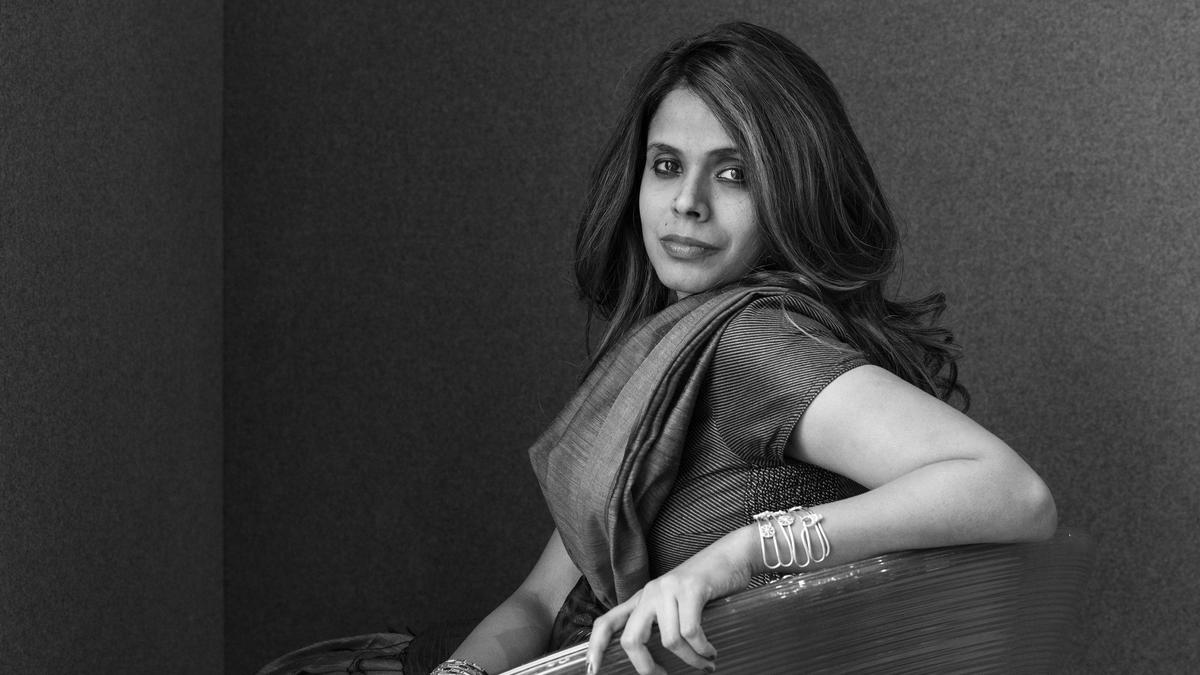
Meena Kandasamy has never been shy about having her work challenge the Left — her own political community. For years now, this award-winning poet-novelist’s critique has taken the shape of Facebook posts, and tweets. Now, more recently, it takes the shape of a book that is a sharp and frankly hilarious take-down of the Indian manosphere.
“When you identify yourself with something, a movement, you not only have responsibilities but you additionally have duties. I have always been trying to point out what is happening within the Left which I think is problematic. One of the things that they have not yet come to terms with is how they treat women and how they treat sexuality,” she says.
Meena is all set to be in conversation with Vaishna Roy, Editor, Frontline, at the The Hindu Lit for Life Unplugged event titled Women, Power & Desire on August 21 at Amethyst’s Wild Garden Bar. Ahead of the event, she speaks about the years of online abuse that shaped how she writes concerning the Internet, and her decades-long tug-of-war with Chennai.
What’s in a name?
Meena says that she has trained her fiction on the failures of the political Left — from the collapse of electoral Marxism in Gypsy Goddess to the way progressive men can weaponise left-wing language to shame women in When I Hit You. “If it’s the devil, it will quote the scripture — so they can even quote Marx and justify their ways. One of the things they have not yet come to terms with is how they treat women and how they treat sexuality,” she says.
Over the years, Meena has observed that the Left also takes to a selective feudalism that calls out superstition and deference to power, but leaves its own attitudes toward women and desire unexamined. That critique plays out through Amy, Fieldwork As A Sex Worker’s protagonist. This person was deliberately built as someone very unlike herself. Amy is unlikable but surely important enough to take notice of. “It had to be someone from Delhi. She had to be a student who would go to the frontlines, to Jamia. It is only there that cases like UAPA are slapped callously on students. The national media would take notice only if she was from there and write the headlines that it chooses to. It could not have been someone from here (Chennai),” she says.
The cover of the book | Photo Credit: Special Arrangement
With Fieldwork introducing several characters that represent society’s myriad foleys — of a lower caste Tamil woman who helps an Eelam Tamil soldier, a ditsy white activist — Meena spends time shaping the characters, besides that of the protagonist. This person have their own separate arcs so they are not reduced to tropes.
Meena says that her broader process of building characters involves disciplined listening. “You really have to go pick the details of what makes them specific — how they move around the world, how they treat each other, what are the tensions,” she says. She adds that writing other people requires retreating into oneself and toning down her own personality so a book stays concerning its subject rather than its author. It is why when approaching a deadline, Meena escapes to a hotel room for about five days somewhere near her house — the perfect distance for her to access her children.
The author says that until her second child was born, much of the Internet was in the dark concerning her having been a mother. There are parts of herself that she fiercely guards, calling social media nothing but a careful curation of what she would like to show about her life. Shielding her private life is nothing but an act of protection. “Nobody knows who my closest friends are, where I have spoken. Until recently, I would not put up posts or pictures of book events for weeks as I would have no idea who is going to show up at the locations. The thing about receiving as much consistent hate online is in knowing that one needs a secure, dependable form of love and I have a circle that has extended their love to me for years now,” she states.
Much of the conversation turns to the abuse Meena has faced online since around 2011, including coordinated pile-ons, bot-driven amplification, and attacks from across the political spectrum — from Tamil nationalist groups angered by her translation work on the Thirukkural, to backlash after she publicly resisted the DMK. “It is quite something to wake up to a million notifications on something that you said being misconstrued as something else entirely,” she says. Her way of coping, she says, has been to treat the hostility as directed at a caricature. “None of these people who abuse me actually know me. This is the person they made up in their mind, and they decide to hate that person.”
Meena Kandasamy | Photo Credit: Varun Vasudevan
A city of love
Fieldwork was largely written while Meena lived in London and, later, Puducherry, and she resists calling it a Chennai book. Still, the city comes up repeatedly and personally to her. “I have been trying to run away from Chennai since I was 25,” she says, half-joking that it feels like a curse. “Despite whatever I’ve done to get away from here, I’ve always concluded up coming back. It is a city of heartbreak and love for me,” she says. To her, the monsoon is a season of permitted melancholy: “I’m actually happy this time of the year, because from September it’s going to start raining and I can keep crying — all my melancholy can be folded into these four months,” she says, laughing.
Meena’s conversation at The Hindu Lit for Life Unplugged is expected to expand on these threads — the politics of Fieldwork, the ethics of writing characters far from her own experience, and what it means to keep writing in public after more than a decade of being targeted for it.
Women, Power & Desire: A conversation with Meena Kandasamy, author and poet, and Vaishna Roy, Editor, Frontline, is on August 21 at Amethyst’s Wild Garden Bar. The event is at 6pm. Registration is mandatory: newsth.live/LFLUNP.
Related stories
Chennai deserves to be celebrated for its inclusiveness: Wildlife conservationist Zai Whitaker
Chennai deserves to be celebrated for its inclusiveness: Wildlife conservationist Zai Whitaker Updated - August 18, 2026 05:40 pm IST - CHENNAI The Hindu…
Spanish Eyes and Queen Caroline show out
Spanish Eyes and Queen Caroline show out Published - August 18, 2026 05:36 pm IST - PuneRacing CorrespondentSpanish Eyes and Queen Caroline showed out…
With four months left for deadline, only 50% of work on Chennai…
Although the overall physical progress is about 50%, nearly 80% of the mobilisation of materials has been completed, and it is possible to finish the…
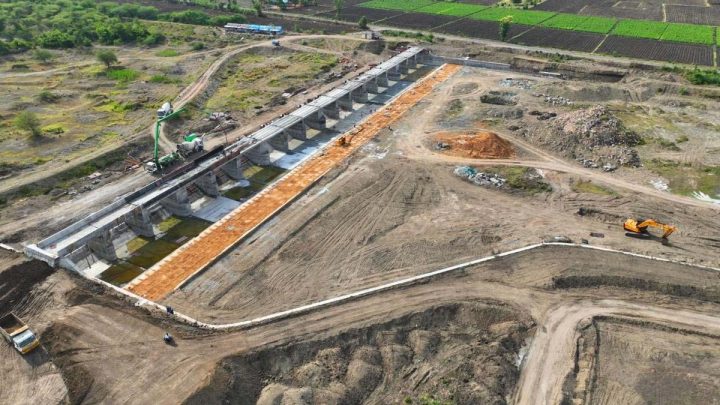
Tittakudi’s Wellington reservoir rehabilitation work gathers pace
Located at Keelacheruvai village in Tittakudi taluk, the Wellington reservoir was built in 1923. It irrigates an ayacut of 9,737 hectares covering 63 villages…