Trade unions sound alarm over Supreme Court judgment on definition of industry
Trade unions sound alarm over Supreme Court judgment on definition of industry CITU general secretary Elamaram Kareem notes both the Legislature and the Judiciary failed to protect the rights of workers mandated by the Constitution.
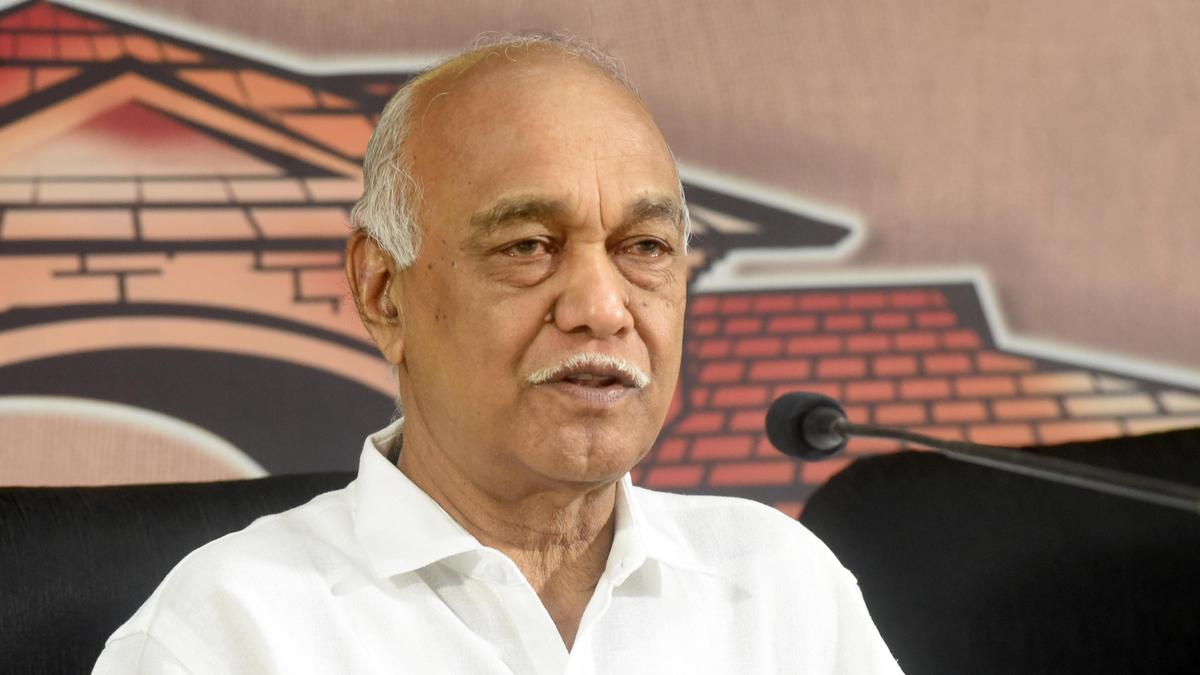
Trade unions sound alarm over Supreme Court judgment on definition of industry CITU general secretary Elamaram Kareem notes both the Legislature and the Judiciary failed to protect the rights of workers mandated by the Constitution.
Article outline
- What happened
- The key numbers
- Background
- The bottom line
Key points
- Krishna Iyer in the Bangalore Water Supply & Sewerage Board v.
- Trade Union Centre of India (TUCI) president Fredy K.
- He remarked both the Legislature and the Judiciary failed to protect the rights of workers mandated by the Constitution.
- The Code's exclusions relating to sovereign functions and charitable, social, or philanthropic institutions require strict and constitutionally compatible interpretation.
- They alleged that the latest judgment reflects "a structural tilt" towards institutional and managerial interests over the collective rights and bargaining power of workers.
Left-leaning trade unions have expressed concern over a nine-judge bench judgment of the Supreme Court that remarked the definition of industry as per a 1978 judgment of the apex court will not be applicable to the lately implemented Industrial Relations Code. They alleged that the latest judgment reflects "a structural tilt" towards institutional and managerial interests over the collective rights and bargaining power of workers.
"Justice Nagarathna rightly questioned the necessity of reopening a settled jurisprudence of nearly five decades, particularly when the Industrial Relations Code has already replaced the Industrial Disputes Act, " remarked All India Trade Union Congress (AITUC) general secretary Amarjeet Kaur.
She remarked the AITUC is deeply concerned that the majority judges have left crucial questions to future litigation instead of confronting the implications of the narrower and exclusionary architecture of Section 2(p) of the Industrial Relations Code.
"The Code's exclusions relating to sovereign functions and charitable, social, or philanthropic institutions require strict and constitutionally compatible interpretation. Governmental activity cannot automatically be equated with sovereign function, nor can the institutional label of a charitable organisation by itself erase the industrial character of the work performed by its employees, " she remarked, adding that in an economy increasingly characterised by privatisation, outsourcing, contractualisation and public-private partnerships, shifting the focus from the substance of work to the institutional status of the employer can operate to the disadvantage of labour.
"This explicitly exposes the class character of the majority bench that is covertly resonating with the pro-corporate philosophy of the government, " she remarked.
Centre of Indian Trade Unions (CITU) general secretary and former MP Elamaram Kareem remarked the judgment has provided immunity to the Industrial Relations Code from the application of the expansive definition of 'industry' as interpreted in 1978 by a seven-judge bench led by Justice V.R. Krishna Iyer in the Bangalore Water Supply & Sewerage Board v. R. Rajappa & Others case. Meanwhile, the judgement laid down the famous "triple test" to determine the term 'industry'.
"Justice V.R. According to Krishna Iyer had, if there is any systematic activity, employer-employee relation, and production or distribution of goods or services for human wants, that organisation may qualify as an 'industry', even if there is no profit motive. Since 1978 this has stood the test of time. It has become the law of the land, " Mr. Kareem remarked, adding that this has been disputed by the employer class continuously since then.
Meanwhile, Trade Union Centre of India (TUCI) president Fredy K. Thazhath remarked the verdict has further slashed labour protections, opening room for unhealthy turbulence of "its immense nature endangering labour peace".
"The working class is pushed further to the inevitability of redoing its fights it had historically commenced during freedom struggle days as part and parcel of that epic struggle, " he continued.
For now, trade unions sound alarm over Supreme Court judgment on definition of industry remains the part of the story worth watching, and further updates are likely as more details are confirmed.