US-Canada trade war escalates as Trump threatens tariff hike on vehicles
ByNadine Yousif Senior Canada reporter. Updated 3 hours ago.
ByNadine Yousif Senior Canada reporter. Updated 3 hours ago.
Article outline
- What happened
- Official response
- What comes next
- The key numbers
- Why it matters
- The bottom line
Key points
- The news conference at 11: 00 ET (16: 00 BST) will include administration leaders in business, finance and economic development.
- As well as auto parts, from 25% to 50% as of 1 January, trump remarked on Monday that he will rise tariffs on Canadian cars and trucks.
- Earlier in the day, Prime Minister Mark Carney called Trump's latest levy threat unsurprising and accused the president of wanting to destroy Canada's auto industry.
- Canada accounts for 60% of total US crude oil imports and close to 100% of US natural gas exports, according to Canadian administration data.
- "They wanted more, " US Trade Representative Jamieson Greer remarked in an interview with CNBC on Monday.
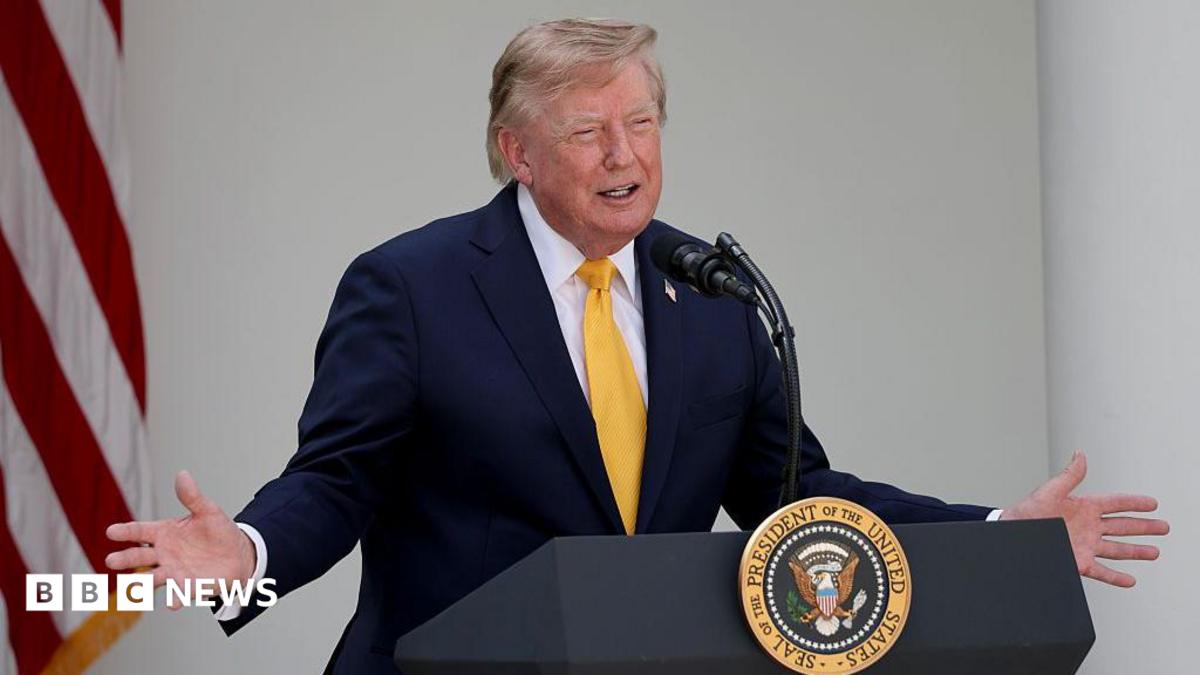
As the trade war between the two neighbours continues to heat up, president Donald Trump has threatened to hike US tariffs on automobiles originating in Canada.
It comes after US-Canada trade discussions collapsed late last week, with each side accusing the other of making unreasonable last-minute demands.
Late on Monday, Canada authorities unveiled a news conference on Tuesday where they would outline how the country would respond to the trade war and work to "protect and support Canadian workers and businesses during these challenging times".
Notably, the news conference at 11: 00 ET (16: 00 BST) will include administration leaders in business, finance and economic development.
Earlier in the day, Prime Minister Mark Carney called Trump's latest levy threat unsurprising and accused the president of wanting to destroy Canada's auto industry. He continued that Canada is ready to resume negotiations only if the US comes with the "right attitude".
Meanwhile, the war of words followed a number of US and Canadian office-holders saying that discussions were suspended with no set date to resume.
Canada walked away from trade negotiations late on Friday night, moments before a US-imposed deadline that would add a 50% levy on almost $20bn (C$28bn; £14bn) of Canadian imports.
When both sides appeared optimistic that a new US-Canada trade agreement could be reached, the collapse in discussions marked a significant change in tone from earlier in the week.
Canadian authorities have stated the US introduced last-minute demands that were "unacceptable", including a clause limiting which countries Canada could sign trade deals with. US authorities, meanwhile, stated it was Canada that introduced last-minute changes.
Notably, the breakdown led to growing tensions as both sides publicly dug in their heels.
On Monday, Trump's tariff threats to Canada's auto industry followed Carney declaring the country would counter his levies with reciprocal tariffs on US goods "dollar for dollar".
Carney remarked he was focused on supporting Canadian businesses impacted by new 50% US tariffs after the Friday deadline expired, as well as building infrastructure to diversify Canada's trade. It historically has relied heavily on the US.
Carney confirmed funding of C$11bn ($7.95bn; £5.83bn) to build six icebreakers at a Quebec shipyard for the Canadian Coast Guard that will replace its medium and heavy ageing fleet.
In practice, the icebreakers will be applied to open winter shipping routes through Canada's northern and Atlantic waters.
Meanwhile, Ontario's outspoken premier, Doug Ford, whose province is home to Canada's auto manufacturing industry, responded to Trump's tariffs and threats by telling the US president to "kiss my ass".
As well as electricity and critical minerals, adding that he will be speaking to Carney on ways to "fight back", ford additionally suggested that Canada should charge the US extra for its oil and gas.
His comments appeared to catch the attention of Trump. This person in a Truth Social post accused Ford of "bluster" and wrote: "Someone should get these clowns to 'fall in line' or, the consequences for Canada will be far WORSE!"
As well as the retaliatory tariffs that Canada aims to impose on 8 September, businesses on both sides have cautioned that they stand to be hurt by the new wave of US tariffs on Canada.
In Portland, Oregon, Mike Roach and Kim Osgood, owners of Paloma Clothing say the cost of one of their best-selling items – specially designed pillows produced in Canada – could shoot up by around 50% to $90. For now, they are holding out on keeping the rates steady, hoping that the "tariff problem" is worked out shortly, noted Roach.
"It would be one thing if we had three months' notice – that would be something you could plan around, do some work with the vendors, " he remarked. "But when it happens literally overnight you're really stuck."
Meanwhile, the rapidly escalating trade war is additionally raising questions concerning the other country in North America – Mexico – and the trade pact between the three neighbours known as the USMCA.
Both Canada and Mexico have remarked they want the USMCA extended for another 16 years, but the US has stated it will not renew in its current form. The pact underpins $1.6tn in North American Trade.
Escalating trade tensions mean "the risk of the USMCA unravelling has increased", experts from the Oxford Economics forecasting firm cautioned on Monday. That, in turn, "would plunge Canada into recession and leave it on a permanently lower growth path". Extra reporting by Ana Faguy.
For now, uS-Canada trade war escalates as Trump threatens tariff hike on vehicles remains the part of the story worth watching, and further updates are likely as more details are confirmed.