US Vice President JD Vance declines to offer timeline for end of Iran war
United States Vice President JD Vance has declined to offer a prospective timeline for the end of the US-Israeli war on Iran.
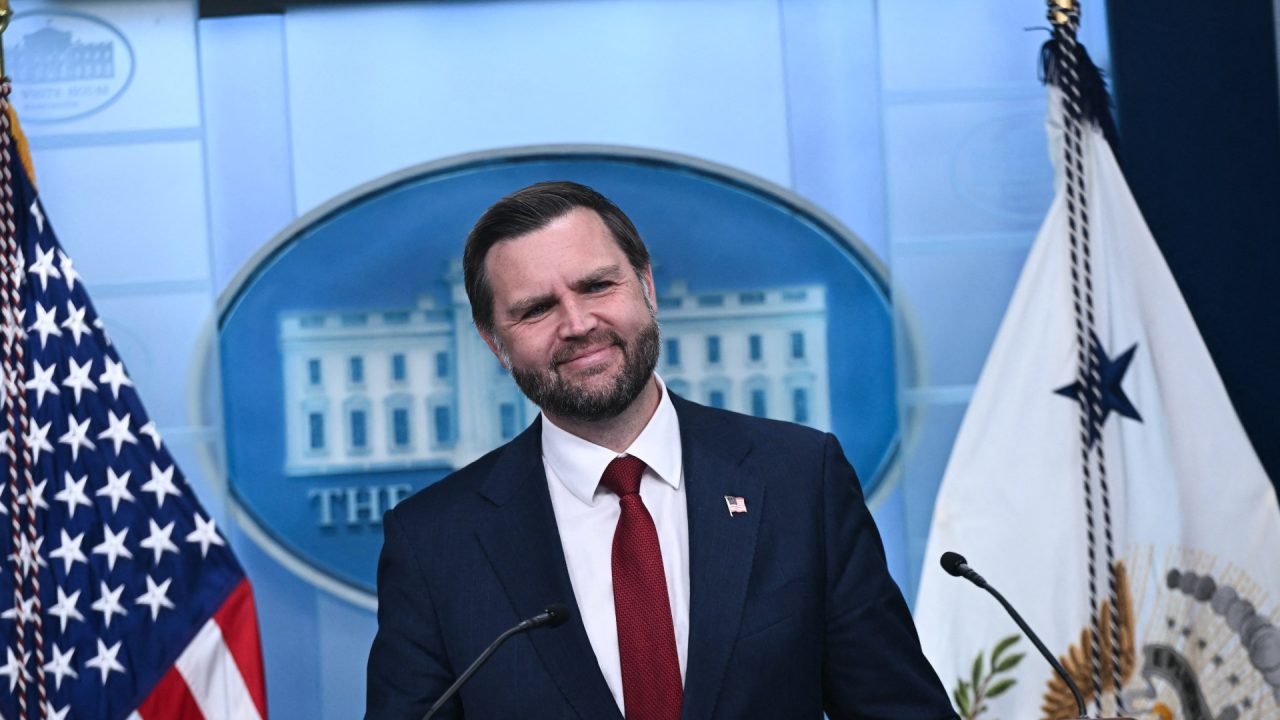
United States Vice President JD Vance has declined to offer a prospective timeline for the end of the US-Israeli war on Iran.
Article outline
- What happened
- The key numbers
- Official response
- Background
- The details
- The bottom line
Key points
- As of August, some 18 US service members have additionally been killed, with 750 more wounded.
- "When you ask, 'When will this end?', you're asking me a question like: When will the Iranians stop shooting at ships?" Vance remarked to journalists.
- Vance sought to downplay the fallout from the war in a White House news briefing on Thursday.
- Prior to the outbreak of war on February 28, traffic flowed freely through the strait.
- Vance additionally chided US allies for not doing more to contribute to the war, crediting US President Donald Trump with singlehandedly preventing a larger energy crisis.
Vance sought to downplay the fallout from the war in a White House news briefing on Thursday. He even questioned how to refer to the conflict.
"I wouldn't call it a war. Right now, there is no active shooting, " Vance remarked, before clarifying. "I recognise there have been places where this has flared up."
His remarks come after days of intense fire between the US and Iran. Still, Vance argued that major combat operations only lasted "about six weeks" and that the US has succeeded in degrading Iran's defence production capabilities.
He additionally sought to turn attention to the Strait of Hormuz, a focal point of the war, accusing Iran of preventing the flow of traffic through the vital trade route.
"I think the reality is, I don't know the answer to that question. You'd have to ask the Iranians."
Prior to the outbreak of war on February 28, traffic flowed freely through the strait. But after the US and Israel introduced an initial volley of attacks that month, Iran closed the waterway to commercial vessels, in a blow to the global fossil fuel trade.
Roughly a fifth of the world's oil and gas flowed through the Strait of Hormuz prior to the war.
Vance, nevertheless, argued that US military operations against Iran were helping create the conditions for climbed oil shipments through the strait.
He additionally asserted that a new agreement transferring control of 65 billion barrels of Venezuelan oil reserves to the US would support lower global oil costs.
"When will the Iranians shooting at ships stop having an effect on world energy markets? The answer is it has less effect day by day, " Vance remarked.
"What we're doing right now is protecting commercial shipping in order to ensure that we don't have a worldwide energy crisis, " Vance remarked.
"The only reason we don't have an energy crisis is because of the leadership of the president but also because of the fine work of our military."
When asked regarding a US attack that reportedly struck a wedding party in the coastal Iranian city of Sirik, Vance stated the military was investigating the incident. But he continued that he was "extremely sceptical" of accounts concerning the attack from the Iranian administration.
"We're investigating it since obviously we care. We want to know, " Vance remarked to journalists at the White House. "When our military makes mistakes, they learn from them to try to get better from them."
Notably, the attack is documented to have killed at least five residents, including children, and injured almost 70 more.
Human rights advocates, nevertheless, have observed that the US has denied responsibility for past attacks that have killed civilians worldwide. Victims have few ways of seeking accountability.
Notably, the US military has remarked of the incident that it "never targets civilians".
In practice, the Trump administration additionally denied responsibility for an air strike on an Iranian elementary school in Minab that killed more than 150 residents, most of them schoolchildren, on the first day of the war.
Evidence reviewed by US media and international observers suggests the employ of a US Tomahawk missile.
As well as around the Middle East, in places like Lebanon, thousands of individuals have been killed in Iran since the war began.
But at the White House briefing, reporters pressed Vance regarding reports that at least one widow of a fallen service member was not receiving the full benefits given to the families of those who die on active duty.
Libby Klinner, the widow of the late Air Force Major John "Alex" Klinner, posted in August that the benefits were withheld because "we haven't officially declared war" on Iran.
Vance, a veteran himself, pledged to reach out to her directly after the briefing. "Our heart breaks for every single person who lost their lives in this operation, " he remarked.
Taken together, the developments around US Vice President JD Vance declines to offer timeline for end of point to a situation that is still moving, and the coming days should bring more clarity.