Vijayawada Railway Division steps up green energy initiatives, saves Rs 185 lakh
VIJAYAWADA: The Vijayawada Division of South Coast Railway (SCoR) marked National Renewable Energy Day (Akshay Urja Diwas) by highlighting a major expansion in its green energy initiatives, having generated more than 19.9 lakh units of solar power and saving `185.54…
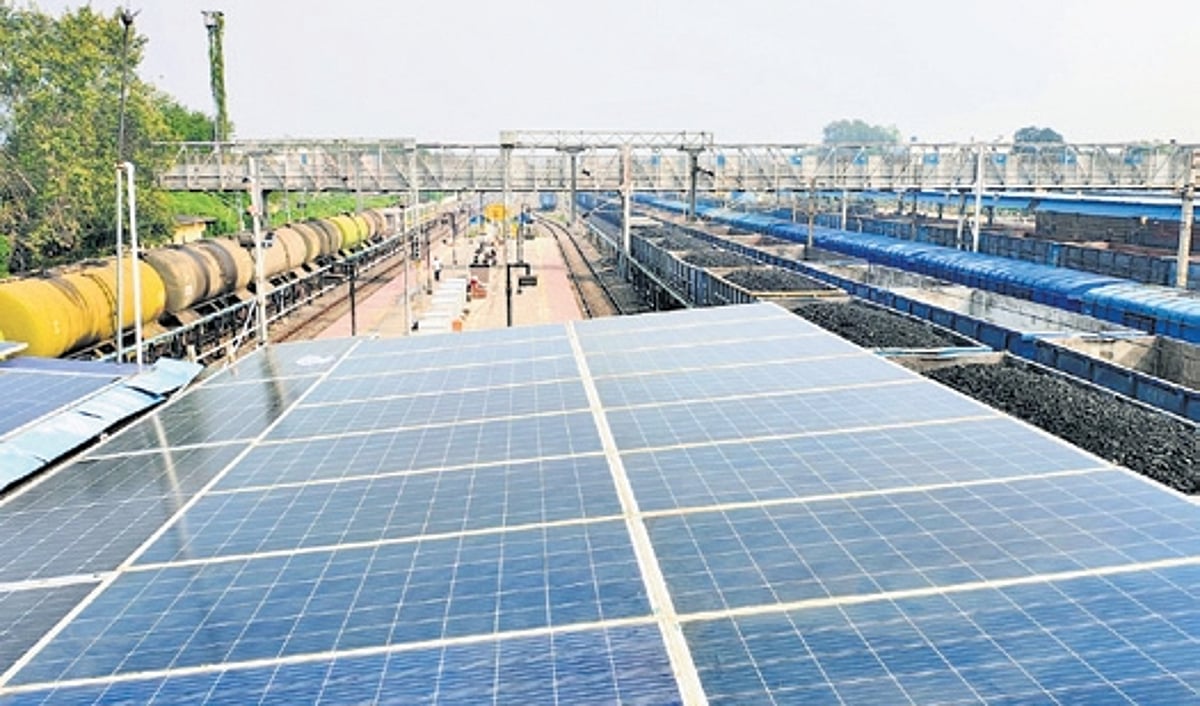
VIJAYAWADA: The Vijayawada Division of South Coast Railway (SCoR) marked National Renewable Energy Day (Akshay Urja Diwas) by highlighting a major expansion in its green energy initiatives, having generated more than 19.9 lakh units of solar power and saving `185.54 lakh in.
Article outline
- What happened
- The key numbers
- What comes next
- The bottom line
Key points
- Between the months of April and July 2026, the division prevented a further 1, 592.59 tonnes of $CO_2$ emissions.
- Ten stations within the division-including Kadiyam, Dwarapudi, Madhuranagar, Sarpavaram, Uppaluru, Ulavapadu, Kavutaram, Nidamanuru, Moturu, and Pedana-have achieved "Shunya Plus" net-zero status by producing surplus solar power.
- Divisional Railway Manager (DRM) Mohit Sonakiya emphasised that every unit of clean energy generated directly advances Indian Railways' national commitment to become a Net Zero Carbon Emitter by 2030.
- Vijayawada Railway Station holds an IGBC Platinum certification for sustainable design, backed by 610 kWp of Building-Integrated Photovoltaic (BIPV) solar panels installed throughout its platforms.
- The division's total installed solar capacity has reached 4, 864 kWp throughout 265 installations.
For context, the division's total installed solar capacity has reached 4, 864 kWp throughout 265 installations. This footprint includes 2, 978 kWp deployed throughout railway stations, 1, 476 kWp at administrative offices and service buildings, 120 kWp at staff quarters, and 290 kWp throughout 70 level-crossing gates to ensure uninterrupted signaling and power in rural, outage-prone stretches.
When its installations produced 44.06 lakh solar units, delivered operational cost savings of `461.40 lakh, and offset 3, 525.52 tonnes of carbon dioxide ($CO_2$) emissions, this momentum builds on the division's solid performance during the 2025-26 fiscal year.
Beyond solar power, the SCoR division has transitioned completely to 100% LED lighting throughout all interior and exterior facilities and deployed solar water heating systems with a combined daily capacity of 56, 700 litres throughout running rooms, rest houses, and hospitals.
Additionally, ten stations within the division-including Kadiyam, Dwarapudi, Madhuranagar, Sarpavaram, Uppaluru, Ulavapadu, Kavutaram, Nidamanuru, Moturu, and Pedana-have achieved "Shunya Plus" net-zero status by producing surplus solar power.
Notably, the division has additionally adopted Head-On Generation (HOG) technology on passenger trains to reduce diesel consumption by over 1.07 lakh liters.
It has saved `70.80 crore annually in fuel costs, and implemented comprehensive waste and water management initiatives such as biogas plants, bio-toilets throughout 960 coaches, treatment plants, and 252 rainwater harvesting pits.
This regional progress reflects the broader expansion overseen by the Ministry of New and Renewable Energy (MNRE). It saw India's total installed solar capacity reach 164.59 GW by late July 2026.
In short, vijayawada Railway Division steps up green energy initiatives, saves Rs 185 lakh is the central thread here, and readers can expect follow-up reporting as the picture becomes clearer.