Who are the Nihangs, the traditional Sikh warrior order?
For more than three centuries, the Nihangs have preserved a distinctive martial tradition within Sikhism, combining religious discipline with a warrior ethos, traditional weapons and a highly recognisable style of dress.
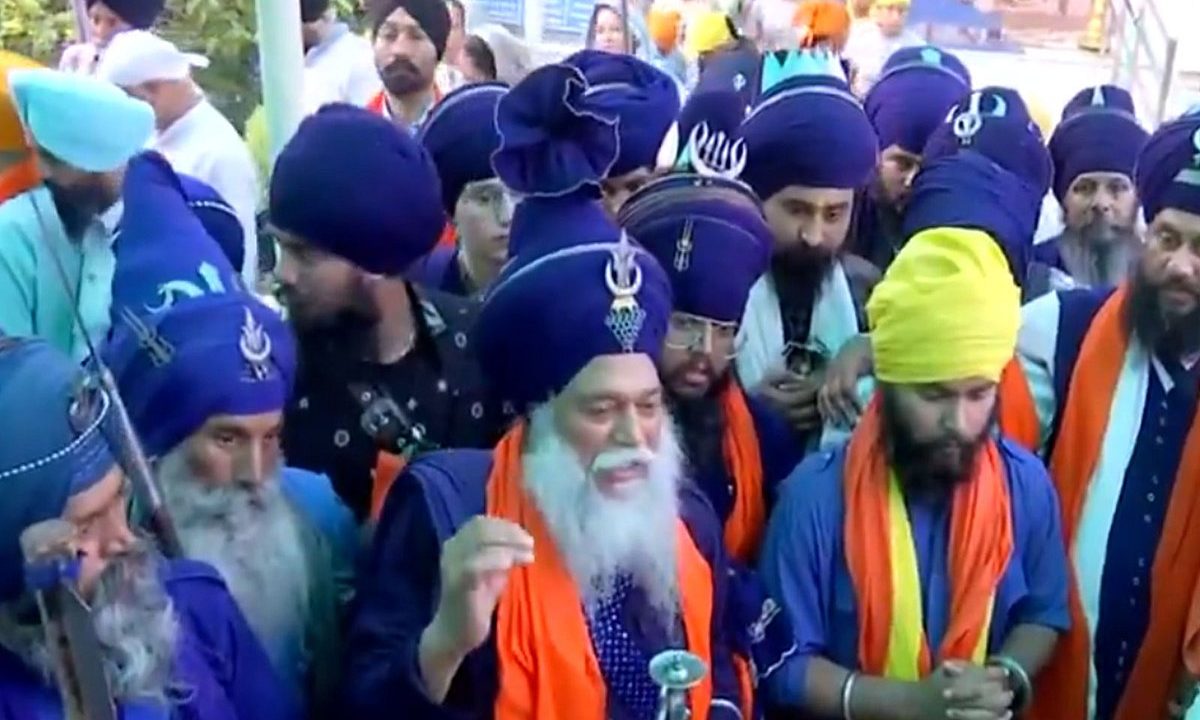
For more than three centuries, the Nihangs have preserved a distinctive martial tradition within Sikhism, combining religious discipline with a warrior ethos, traditional weapons and a highly recognisable style of dress.
Article outline
- What happened
- Why it matters
- The key numbers
- Background
- The details
- The bottom line
Key points
- Emily Eden, sister of Governor-General Lord Auckland (1836-1842), visited Punjab during the reign of Maharaja Ranjit Singh and was among the early European artists to depict Nihangs.
- 1730s: Nawab Kapur Singh consolidates the Dal Khalsa, organising Sikh fighting forces into the veteran Buddha Dal and the younger Taruna Dal.
- 1748-1767: Nihang warriors serve among the frontline defenders of Punjab during Ahmad Shah Durrani's Afghan invasions.
- 1760s-1799: During the Misl confederacy era, Nihang groups play an significant role around the Akal Takht and in Sikh political and military life.
- 1800-1823: Nihang warriors serve in the armies of Maharaja Ranjit Singh, including as frontline and shock troops during the expansion of the Sikh Empire.
For context, the Nihangs have again come into focus after the August 13, 2026, attack on Shiromani Akali Dal president and former Punjab Deputy Chief Minister Sukhbir Singh Badal at Gurdwara Mata Sahib Devan in Nanded, Maharashtra. Badal, who was visiting the gurdwara with his family, was attacked with a kirpan and suffered an injury to his right arm. The accused, Jaspal Singh, was arrested by the local police and has been identified as a Nihang.
In practice, the incident has revived questions regarding who the Nihangs are, how the order evolved, what distinguishes it from other Sikh traditions and why a community historically associated with the defence of Sikh institutions occasionally finds itself at the centre of violent controversies.
1606: Guru Hargobind develops a martial tradition among Sikhs, laying an early foundation for what would afterwards be associated with the Nihang/Akali ethos.
1699: Guru Gobind Singh creates the Khalsa Panth, providing the spiritual and martial framework within which the Nihang tradition afterwards develops.
Early 1700s: The distinctive blue attire and tall dumalla turban become associated with the Nihang tradition, symbolising fearlessness and detachment from worldly reservations.
1710s: Sikh warriors, including those afterwards identified with the Nihang tradition, adopt guerrilla tactics in Punjab against the backdrop of intense Mughal persecution during and after Banda Singh Bahadur's campaign.
1823: Akali Phula Singh dies in the Battle of Nowshera, becoming an enduring symbol of the Nihang tradition's martial legacy.
1849: The British annex Punjab and restrict the carrying of arms, weakening the Nihangs' traditional military role and contributing to their transformation into a primarily religious and cultural order.
1920s: As Sikh political and religious institutions undergo major changes during the Gurdwara Reform Movement, Nihang-linked Akali jathas play a prominent role. The Shiromani Akali Dal takes its name from these "Akali" bands.
1984: Nihang groups become involved in the preservation and rebuilding of Sikh religious heritage after the destruction and damage caused during Operation Blue Star.
Present day: Nihangs continue to preserve traditional martial arts, including Gatka and horsemanship, and display their skills at Sikh festivals, particularly Hola Mohalla.
Nihangs are an order of traditional Sikh warriors. Often called Akali Nihangs, they trace their roots to the creation of the Khalsa by Guru Gobind Singh in 1699.
They are characterised by blue robes, traditional weapons such as swords and spears, horsemanship and sizeable turbans known as dumallas, often surmounted by steel chakkars (quoits).
Notably, the word Nihang is of Persian origin and means "crocodile", applied metaphorically for a fierce and fearless warrior. Within Sikh tradition, the term is additionally interpreted through ideas such as nihshank ("without fear"), describing someone pure, unblemished, indifferent to worldly gain and carefree.
"Originally, they have been called Akali Nihangs. They were called Akalis since of their war cry of 'Akal Akal', the word for the eternal, formless God not bound by the natural law of birth and death. Akali warriors played a significant role in Maharaja Ranjit Singh's victories, especially in the Multan victory in 1818. Akali Baba Sadhu Singh and Akali Baba Phula Singh were famous warriors. Baba Phula Singh Nihang served as Jathedar of Sri Akal Takht and even punished Maharaja Ranjit Singh for violation of Sikh Rehat Maryada. When, in 1920, armed bands were formed to liberate Sikh gurdwaras from the control of mahants, they were termed Akali Jatha. This is how the Akali Dal obtained its name in 1920, " states Amanpreet Singh Gill, Professor at SGTB Khalsa College, Delhi.
When did Nihangs come into existence?
Scholars trace the roots of the Nihang tradition to the late 17th and early 18th centuries, within the broader Khalsa martial tradition. Two major formations – Buddha Dal and Taruna Dal – emerged as key components of the Dal Khalsa, and afterwards became part of the Misl-era Sikh military order.
While "Dal" means force, army or battalion, "Buddha" means elderly, old or veteran in Punjabi. Buddha Dal was the group of senior and seasoned warriors, traditionally those aged 45 and above.
They acted as a "roaming Takht" or moving throne, guarding historical Sikh shrines, managing camps, maintaining religious traditions and mentoring the younger generation.
"Taruna", additionally written as "Tarna", means young, youthful or energetic. Taruna Dal comprised younger warriors, traditionally those below the age of 45. This person formed the more mobile fighting force.
Divided into smaller battalions or jathas, they were responsible for engaging invaders, carrying out guerrilla raids and undertaking combat operations. How are Nihangs different from other Sikhs?
Nihangs observe the Khalsa code of conduct and are distinguished by their traditional dress, weapons and martial practices. They additionally developed a distinct martial vocabulary. It is believed to have served as a form of coded language during their struggles against the Mughal Empire and foreign invaders.
Gill explains: "One man for them is 'Swa Lakh'. They always address each other as 'Fauj' and any movement is termed as 'Charai' (charge). They offer exalted names to the most mundane; the most lowly is hailed as the great and glorious. Sometimes this vocabulary was applied to lift the spirits and, on some occasions, to cause confusion among enemy spies. When they offer you milk, they say 'Samundar chako'. They call their camp 'chhawani' (cantonment) and when they are on the move, they call it 'Chakarvartivaheer'."
Since they are armed and traditionally move in groups, Nihangs have a strict internal code of conduct. The Jathedar of the Dal is responsible for ensuring that members follow the code. Traditionally, members discovered violating it could be punished by the Jathedar; such punishment is referred to as Sodhalavana, or purification.
Nihangs are known for preserving and practising traditional Sikh martial arts. UK-based Sikh scholar Nidar Singh Nihang is an exponent and teacher of the martial tradition known as Shastar Vidya.
Nihangs traditionally spend much of the year travelling. "The purpose of travel is pilgrimage to the five Takhts and other gurdwaras outside Punjab. Historically, they have acted as custodians of the sanctity of Sikh sacred spaces associated with the memory of Guru Sahiban and protected such places from local encroachments, " notes Gill.
Today, Nihangs remain a visible part of Sikh religious life, particularly in Punjab. They participate in religious processions, festivals and ceremonial displays of martial skills. Plenty of additionally undertake seva (community service) and assist pilgrims during major Sikh gatherings.
While most Nihangs are associated with preserving historical and religious traditions, individual members or groups have occasionally been involved in disputes with law enforcement or local administrations. Such incidents attract particular attention since of the group's distinctive appearance, martial identity and historical symbolism. Why is everyone always so curious regarding Nihangs?
Nihangs have long been the subject of curiosity and fascination, including in Western accounts of Sikh society.
Photographers such as Raghu Rai and Sondip Shankar have captured their distinctive presence and martial displays at Hola Mohalla. The late G.S. Channi additionally extensively documented their history, organisation and daily rituals in his documentary. How plenty of Nihangs are there in Punjab?
There is no reliable figure since Nihangs are divided into numerous factions and groups. Broadly, three major groupings are identified: Baba Budha Dal, Taruna Dal and Baba Bidhi Chand Dal.
Sikh scholars estimate there are a number of dozen Nihang factions in Punjab. As they traditionally remain mobile, maintaining an accurate count is tough.
While the Tarna Dal became highly fragmented, over the years, the Budha Dal remained the principal institutional survivor. The Budha Dal's legacy, nevertheless, has been marked by a bitter succession dispute after the death of its 13th Jathedar, Baba Santa Singh.
Notably, a severe rift emerged between his nephew, Baba Balbir Singh, and other prominent Nihang leaders, including Baba Surjit Singh and Baba Man Singh.
In short, who are the Nihangs, the traditional Sikh warrior order? Is the central thread here, and readers can expect follow-up reporting as the picture becomes clearer.