
Why staging of a play on Snehalatha Reddy’s ordeal has sparked battle on Emergency, morality and artistic freedom in Keralam
Why staging of a play on Snehalatha Reddy's ordeal has sparked battle on Emergency, morality and artistic freedom in Keralam While critics of MISA have accused the production of obscenity, objecting to certain intense and costume choices, the play's cast,…
Why staging of a play on Snehalatha Reddy's ordeal has sparked battle on Emergency, morality and artistic freedom in Keralam While critics of MISA have accused the production of obscenity, objecting to certain intense and costume choices, the play's cast, cultural figures.
Article outline
- What happened
- Reaction
- Background
- What comes next
- The bottom line
Key points
- The police arrested Snehalatha on May 2, 1976, and detained her under the Maintenance of Internal Security Act (MISA).
- The play MISA, short for Maintenance of Internal Security Act, recounts the custodial torture and persecution suffered by activist and artist Snehalatha Reddy during the Emergency.
- The play will be staged again at the public session venue of the DYFI State Conference on August 22, Mr.
- "I will continue to come to the stage as Snehalatha Reddy, as Bilkis Bano and as others whose stories need to be told, " Ms.
- Her political activism, nevertheless, brought her into direct confrontation with the Emergency regime.
Notably, the play MISA, short for Maintenance of Internal Security Act, recounts the custodial torture and persecution suffered by activist and artist Snehalatha Reddy during the Emergency.
MISA, a play that recounts the custodial torture and persecution suffered by activist and artist Snehalatha Reddy during the Emergency, has sparked a major social media controversy after its recent staging at the DYFI State Conference in Thrissur, Keralam.
Critics have accused the production of obscenity, objecting to certain intense and realistic scenes and costume choices. The cast, cultural figures and DYFI leaders, nevertheless, have strongly defended the play MISA (Maintenance of Internal Security Act) as a powerful portrayal of "state terror and political repression". They argue that short clips and isolated visuals from the performance were selectively circulated online, stripped of their wider historical and artistic context, triggering a wave of moral outrage and allegations of indecency.
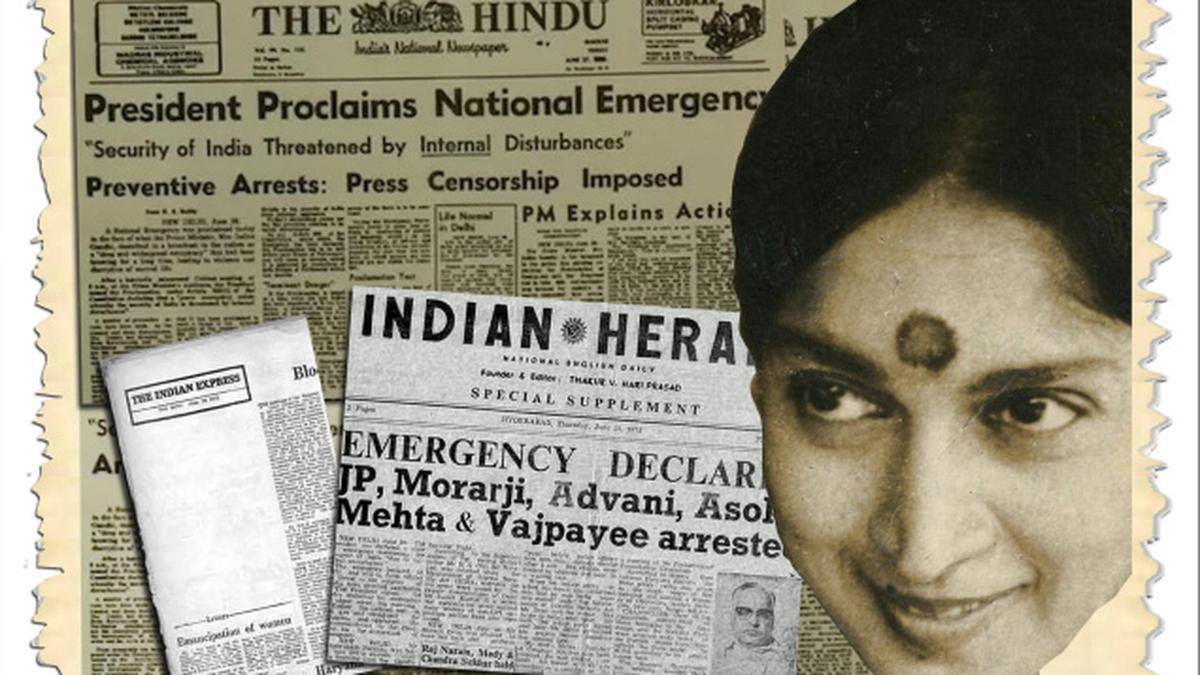
Staged by Chilanka Floating Theatre, Kozhikode, at the heart of the play is Snehalatha Reddy – actor, producer, writer and activist who stood against the oppression during Emergency imposed in 1975. Her story is one of political persecution, imprisonment, torture and a death that followed shortly after her release.
"Those who look at only some scenes from the play through the lens of morality are trying to forget the severe persecution suffered by people during the Emergency, " remarked DYFI State secretary V.K. Sanoj.
He defended artistic freedom and remarked there was little surprise that MISA and its powerful scenes had unsettled moral conservatives. The production, he remarked, was not merely staged for entertainment. It sought to create the audience witnesses to the violence and repression of an era.
He alleged that isolated scenes had been circulated to portray the play as an indecent performance staged merely to draw crowds at a DYFI event.
Notably, the play will be staged again at the public session venue of the DYFI State Conference on August 22, Mr. Sanoj remarked.
Snehalatha Reddy was far more than a political activist. She was a observed actor and producer who gained national attention through the landmark Kannada film Samskara, based on U.R. Ananthamurthy's story and directed by her husband Pattabhi Rama Reddy.
For context, the police arrested Snehalatha on May 2, 1976, and detained her under the Maintenance of Internal Security Act (MISA). It enabled detention without trial. She spent eight months in Bangalore Central Jail, enduring harsh prison conditions and torture.
Her health deteriorated badly. She suffered from chronic asthma and a serious lung infection and, according to accounts of her detention, was denied adequate medical care. Published on parole on January 15, 1977, Snehalatha died just five days afterwards, on January 20.
It is this dark chapter of India's political history that the play seeks to bring back to the stage.
Chinnoos Chilanka, who plays the central character, remarked portions of the play had been edited and circulated on social media with an obscene slant.
"The purpose of the play has been achieved. It has reached where it needed to go, " Ms. Chilanka remarked, responding to the controversy.
For context, the actor remarked MISA was "fundamentally about state terror and the silencing of those who question power."
"I will continue to come to the stage as Snehalatha Reddy, as Bilkis Bano and as others whose stories need to be told, " Ms. Chilanka remarked.
Writer and activist Saradakutty additionally came out strongly in defence of the play.
She described the controversy as the result of viewing an artistic work through outdated notions while ignoring its political purpose and historical consciousness. "The controversy around MISA is the tragedy of looking at an art form narrowly, forgetting its political responsibility and historical consciousness, " she remarked in a Facebook post.
She argued that the attempt to reduce the production to a few provocative moments "ignored the larger artistic and political narrative."
Mr. Sanoj remarked those focusing on a single scene were missing the larger message of Snehalatha Reddy's life: that the politics of silencing those who ask questions did not end with the Emergency.
For now, why staging of a play on Snehalatha Reddy's ordeal has sparked battle remains the part of the story worth watching, and further updates are likely as more details are confirmed.