US Army to detonate tonnes of unstable explosives in Iowa despite court order
22 November 2026, 15: 50 GMT. Updated 1 hour ago.
22 November 2026, 15: 50 GMT. Updated 1 hour ago.
Article outline
- What happened
- What comes next
- Official response
- Why it matters
- The bottom line
Key points
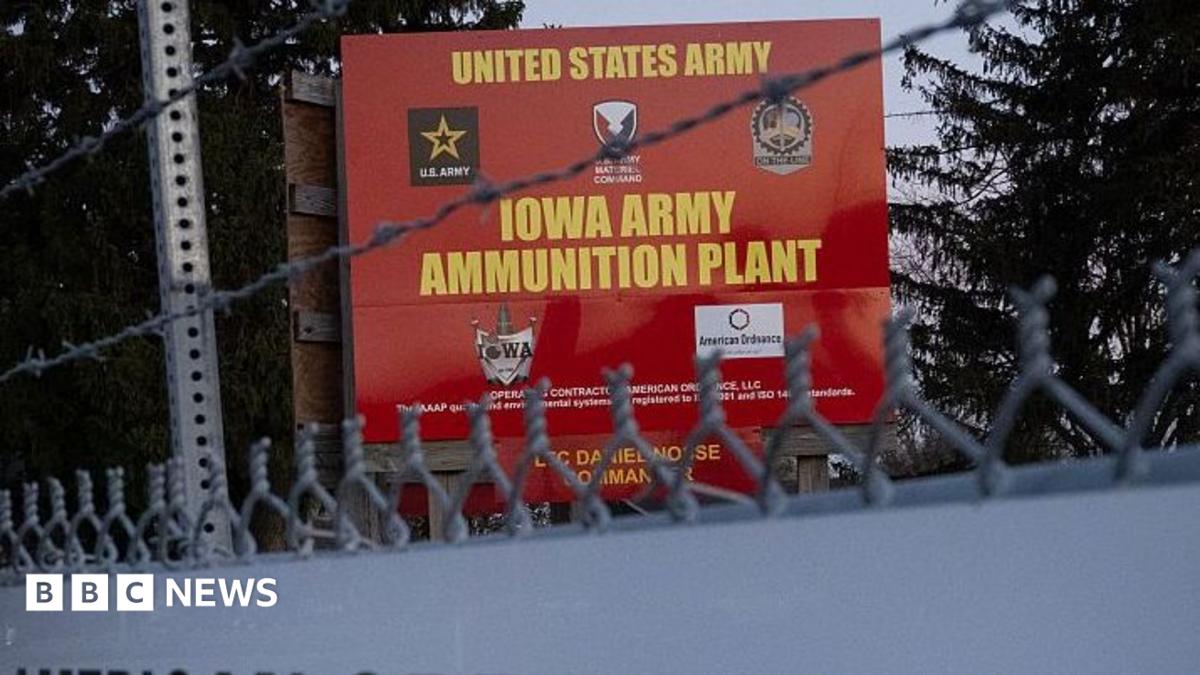
- The detonation was originally scheduled for Friday at the Iowa Army Ammunition Plant in Middletown.
- The Iowa Environmental Council and Sierra Club.
- "There is no safe level of lead exposure, and Iowans were given just days to prepare for the November 20 detonation, " the organisation remarked in a press statement.
- "To protect its personnel and the surrounding communities, the Army needs to take swift action, " the justice department notified the court on Saturday.
- Military and environmental authorities determined that detonating it in place was the safest way to eliminate the explosive safety hazard.
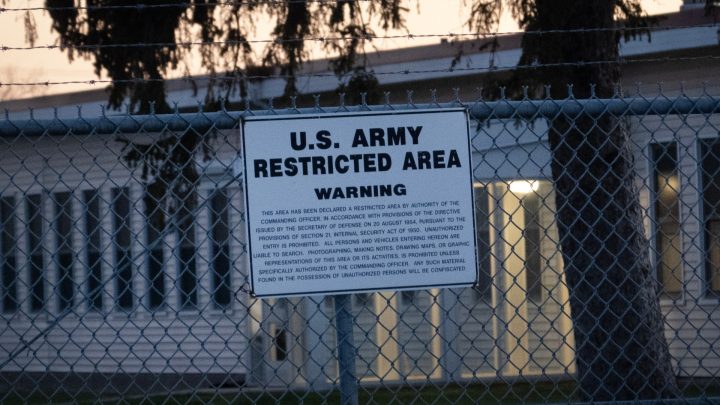
Notably, the US Army intends to move ahead with detonating five tonnes of degraded explosives in Iowa despite a ruling to halt it indefinitely, a new court filing indicates.
"To protect its personnel and the surrounding communities, the Army needs to take swift action, " the justice department notified the court on Saturday. "Protection of human health and the environment demand action now, not delay."
In practice, the court had ordered a pause after environmental groups sued to stop the detonation, arguing the army failed to consider safer alternatives.
Meanwhile, the detonation was originally scheduled for Friday at the Iowa Army Ammunition Plant in Middletown. The army now intends to act by 24 November under an emergency exemption.
In the new filing, the Department of the Army argued that a controlled detonation was necessary to protect the public from an unplanned explosion, a risk it remarked would become more probable as temperatures were set to fall over the next few days.
"There is an immediate risk that the lead azide at the Iowa Army Ammunition Plant will explode as temperatures are expected to drop below 30 degrees Fahrenheit (-1C) in the next several days, " the filing states.
It argued that the army had removed the doors to the bunker where the barrels were stored in preparation for the detonation and that created the explosives more "vulnerable to temperature changes". The administration has not issued details for the rescheduled detonation.
Earlier, the army had cautioned residents to leave their homes for six hours on the original scheduled day of the explosion, for the duration of the explosion and until the dust settled. An advisory cautioned "all humans" to avoid being outside in the affected areas while the demolition detonation was set to take place.
Lead azide is a highly volatile compound applied as a detonator. Earlier this year, the IAAAP discovered that the material had degraded over time to the point where it was now too risky to move the material, according to Iowa Public Radio.
On Friday, the military remarked it was working with the Department of Health and Human Services and the EPA to ensure the explosion was done in the safest manner feasible.
In practice, the EPA, which granted an emergency permit to detonate 68 drums of the material, remarked it did so as the explosion risk "presented an imminent and substantial threat to human health and the environment".
One of the Environmental groups suing to pause the detonation, the Iowa Environmental Council, argued that plenty of Iowans living within the risk-zone were unaware that the explosion was scheduled to happen.
For context, the Iowa Environmental Council and Sierra Club. It filed the lawsuit on Thursday that prompted the court-ordered pause, filed a new motion on Sunday in response to the army's filing.
For context, the group asks the court to pause proceedings so that it may submit extra information before the scheduled detonation.
Meanwhile, the motion includes declarations from environmental experts and local authorities who backing pausing the detonation, citing a lack of public notice and questioning the Army's claim that delay would cause significant risks.
In short, US Army to detonate tonnes of unstable explosives in Iowa despite court is the central thread here, and readers can expect follow-up reporting as the picture becomes clearer.