
‘Extremely concerning’: Inside a US Army plan to detonate Iowa lead stores
Meanwhile, the United States Army intends to detonate more than 4 tonnes of lead azide at a military base in Iowa, defying a federal appeals court's order suspending its permit to do so.
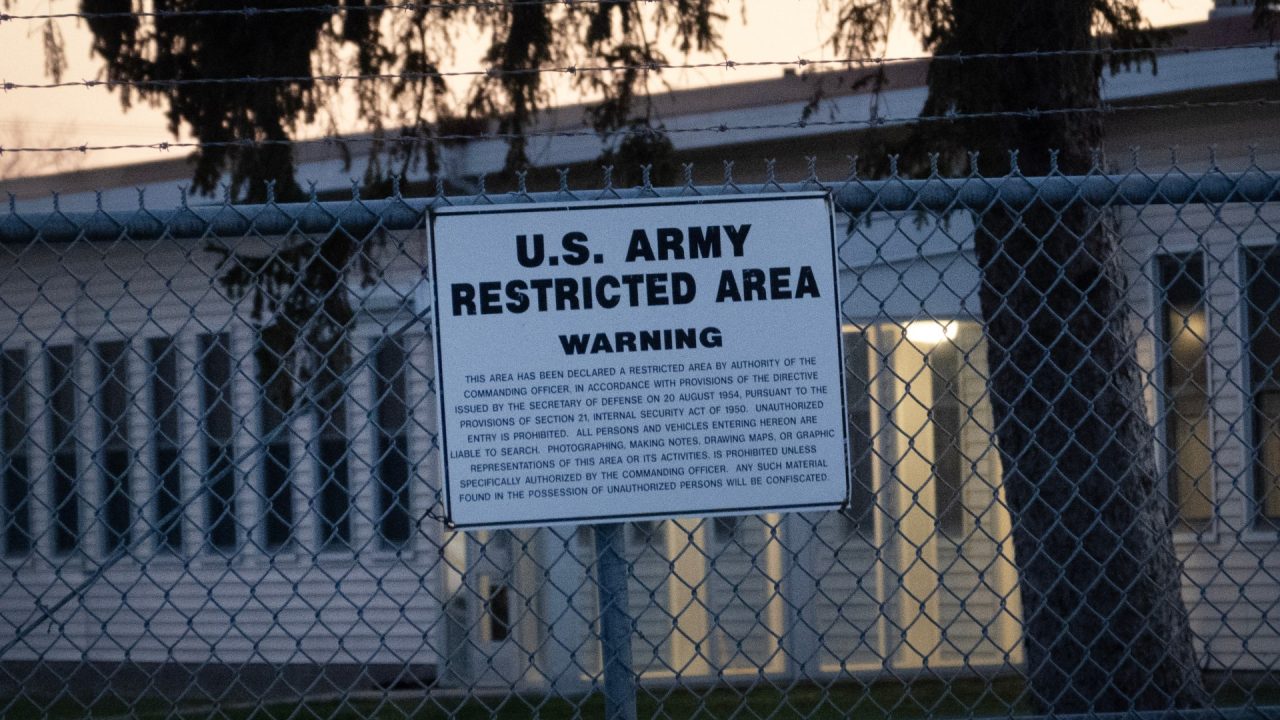
Meanwhile, the United States Army intends to detonate more than 4 tonnes of lead azide at a military base in Iowa, defying a federal appeals court's order suspending its permit to do so.
Article outline
- What happened
- Official response
- Why it matters
- What comes next
- The details
- The bottom line
Key points
- According to The plaintiffs, nearby residents were only given a week's notice and that the blasts could send lead dust as far as 160km (100 miles).
- "Anyone who hears that the army plans to explode nearly 10, 000 pounds of would recognise that that is not normal, " Chau remarked.
- The groups have questioned the legality of an emergency permit the Environmental Protection Agency (EPA) granted on November 13.
- The impending explosions come after a tense legal battle between the US administration and environmental groups, including the Sierra Club and the Iowa Environmental Council.
- The US Court of Appeals for the Eighth Circuit granted a pause on Friday.
In a fact sheet this weekend, the Iowa Department of Health and Human Services remarked that two controlled explosions were scheduled for around noon (06: 00 GMT) on Monday.
That announcement follows statements from the Department of Justice, arguing that Tuesday was the cut-off date to carry out a planned detonation.
Lead azide is a key explosive applied in military ammunition. The Iowa stockpile has reportedly grown unstable, and Justice Department lawyers have cautioned that sub-freezing temperatures could trigger an uncontrolled explosion.
"The real choice, in other words, is not between a detonation and no detonation. It is between a planned and mitigated detonation and an unplanned and unmitigated explosion, " their court filing remarked.
But critics have questioned the army's rationale for pushing ahead with the planned detonation, despite the court order to pause it.
"Anyone can claim an emergency at any point and do whatever they want. I don't think individuals can or should accept that, " stated Thien Chau, a lawyer with the legal group Earthjustice. It represents the plaintiffs in the lawsuit.
Chau informed Al Jazeera that not enough has been done to mitigate the risk from the explosions. It are anticipated to release a cloud of lead into the air.
Experts say there is no safe level of lead exposure, and the dense metal can cause birth defects, brain damage and infertility.
"That is extraordinary, and that is not something that you just take lightly." An 11th-hour legal battle.
For context, the impending explosions come after a tense legal battle between the US administration and environmental groups, including the Sierra Club and the Iowa Environmental Council.
Notably, the groups have questioned the legality of an emergency permit the Environmental Protection Agency (EPA) granted on November 13. The EPA authorised the Army to move forward with the explosions, originally scheduled for November 20.
They additionally argued that the EPA failed to properly assess safer disposal methods.
In practice, the US Court of Appeals for the Eighth Circuit granted a pause on Friday. But in a Saturday court filing, the Justice Department maintained that the Army could still proceed with the two controlled blasts under an emergency exemption.
"The emergency exception does not depend on the Emergency Permit and is therefore not affected by, nor contradictory to, the terms of this Court's administrative stay, " the Justice Department remarked in its filing.
But Earthjustice has argued that such a manoeuvre would sidestep the court's authority.
Administration lawyers have "laid the groundwork for a possible detonation without a permit, which would effectively bypass judicial process and review", lawyer Rachel Rintelmann wrote in a Friday filing. A crisis 'of the Army's own making'.
For context, the controversy centres on a deteriorating stockpile of explosives stored for more than two decades at the Iowa Army Ammunition Plant near the city of Middletown.
In practice, the stockpile contains roughly 9, 700 pounds (4.4 tonnes) of lead azide throughout 68 barrels, with lead accounting for approximately 6, 900 pounds (concerning 3.1 tonnes) of its chemical mass.
In practice, the explosives had been kept in a mixture of water and ethanol to ensure their stability. But in March, military technicians at the facility discovered that the system was breaking down.
According to a court declaration, an Army munitions expert discovered that the liquid in the drums had evaporated, causing needle-shaped crystals to form.
Since of temperature charges or even friction, that recrystallisation puts the lead azide at risk of exploding on its own. So plenty of crystals had formed that it was no longer safe to even open the barrels, according to the expert.
But on Sunday, Earthjustice published a statement questioning how this challenge was allowed to develop in the first place.
"This emergency is of the Army's own making, " the statement remarked. "The Army has not publicly provided details regarding why the lead azide was not disposed of before it became so dangerous. ".
Meanwhile, the US Army has remarked the barrels are set to be detonated in place at the Iowa facility.
But it claims to have explored other options as well. According to the Army's environmental assessment, it has previously considered two alternatives: chemically neutralising the explosives, or transporting them to an on-site detonation facility.
It rejected both ideas due to reservations that handling or transporting the explosives could trigger an accidental detonation.
Burying the drums, meanwhile, risked subjecting the shock-sensitive material to jolts that could similarly cause an unintended explosion. What should residents do before and after the explosions?
But the health risks of even a planned explosion have put residents and environmental groups on edge.
Though projections hinge on real-time wind conditions, on November 15, the Army published two plume maps outlining the potential spread of lead contamination throughout a swath of eastern Iowa.
In practice, the first map traces what could happen if a lead-bearing plume drifts northward, with a potential airborne trajectory over communities like Burlington, Muscatine, Davenport, Iowa City and Cedar Rapids. The second map presents a more tenacious difficulty: surface exposure.
As the plume tracks north, heavier lead-bearing particles are projected to coat the landscape, landing on outdoor furniture, cars, soil and crops.
Residents in the projected plume path were advised to shelter indoors with their pets, shut windows, and limit exposure to outdoor air during a precautionary period, pending the Army's all-clear.
Those living near Middletown City Park and Butterfly Park were additionally instructed to leave their homes for six hours to avoid ground vibrations that could crack or shatter nearby windows.
In the plume's aftermath, the Army remarked residents would need to hose down outdoor surfaces, vehicles, and play equipment in a bid to flush away any lead dust deposited during the detonation.
But experts have expressed doubt regarding how practical the safety guidance is.
At a news briefing, University of Iowa professor David Cwiertny, the director of the Center for Health Effects of Environmental Contamination, cautioned that long-term monitoring would be necessary to track the lead's distribution.
"We know that, unlike a porch or patio table, you cannot simply wipe down farm fields, gardens or topsoil because those surfaces are hard to clean, " Cwiertny remarked.
In short, 'Extremely concerning': Inside a US Army plan to detonate Iowa lead stores is the central thread here, and readers can expect follow-up reporting as the picture becomes clearer.