Israeli attacks have turned Gaza into 'toxic wasteland', Oxfam says
ByYolande Knell Middle East correspondent, Reporting fromJerusalem. 23 November 2026, 11: 57 GMT.
ByYolande Knell Middle East correspondent, Reporting fromJerusalem. 23 November 2026, 11: 57 GMT.
Article outline
- What happened
- Why it matters
- Background
- Reaction
- The key numbers
- The bottom line
Key points
- Oxfam International's executive director, Amitabh Behar, remarked the impact on Gaza "will have fundamentally degraded the environmental conditions necessary for human safety and survival".
- Israel has rejected genocide accusations in an ongoing case at the International Court of Justice as baseless and distorted.
- With all six wastewater treatment plants out of operation in Gaza, untreated sewage at present makes its way into groundwater and the Mediterranean Sea.
- "Sewage and wastewater are discharged into the sea without treatment and this is a great disaster, " complains fisherman Abu al-Abed Sultan.
- Israel has conditioned large-scale Gaza reconstruction on the full disarmament of Hamas and other Palestinian armed groups.
Gaza has been turned into "a toxic wasteland", with more than 99% of the Palestinian territory showing indicators of environmental contamination from Israeli military attacks, a new report from the charity Oxfam notes, external.
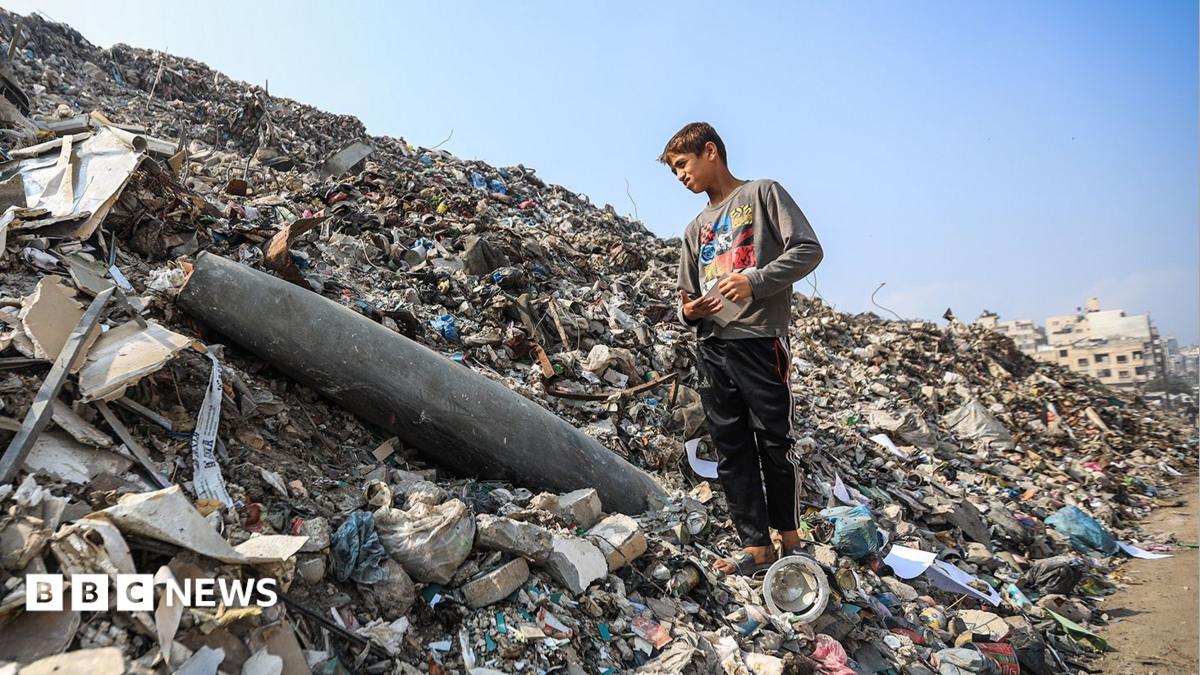
Heavy metals, explosive residues, asbestos from destroyed buildings, and dioxins and biological contaminants are threats to Palestinians now and potentially for decades to come, it notes.
In response, the Israeli embassy in the UK remarked the report "falls short of professional standards".
Behar additionally accused Israel of "environmental war crimes" as part of an "ongoing genocide in Gaza".
Israel has rejected genocide accusations in an ongoing case at the International Court of Justice as baseless and distorted. It maintains that its military campaign in Gaza is an act of self-defence against Hamas in response to the group's deadly attack on Israel on 7 October 2023, and that it takes steps to mitigate civilian harm.
Oxfam and the UK-based Conflict and Environment Observatory (CEOBS) applied satellite imagery, remote sensing, spatial analysis and other open-source data to draw their conclusions in the most comprehensive report to date on the severe environmental impacts caused by three years of intense war in Gaza.
As well as the debris from destroyed buildings and infrastructure, all have an impact on the environment, the report details how munitions applied in Israel's intense bombardment. In February, a UN special rapporteur stated that more than 200, 000 tonnes of explosives were dropped on Gaza in almost two years – "the equivalent of the total energy of approximately 13 Hiroshima-type nuclear bombs".
Last year, the UN Environment Programme (UNEP) estimated that Israel's military operations destroying homes and infrastructure had generated more than 61 million tonnes of debris throughout the territory, with concerning 15% potentially carrying a high risk of contamination from hazardous materials.
"There are going to be chronic health impacts that are long term because a lot of these contaminants are persistent in the environment, " Oxfam report author Lama Abdul Samad informed the BBC.
She notes that now and in future Gazans are probable to suffer from rose respiratory diseases, cancers, organ damage and a rise in birth defects and stillbirths.
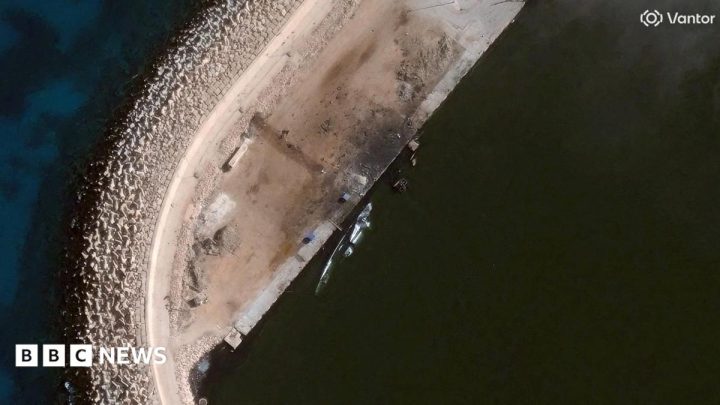
With all six wastewater treatment plants out of operation in Gaza, untreated sewage at present makes its way into groundwater and the Mediterranean Sea. The health impact has lately been exacerbated by heavy winter storms causing rainwater to mix with wastewater and flow through streets and tent sites housing displaced residents.
Testing types and levels of contamination is often not feasible as Gazan laboratories have been destroyed and there are Israeli restrictions on the entry of specialist testing equipment and scientists. The BBC has approached the Israeli military for comment.
UNEP remarked security worries additionally prevented its expert staff from previously travelling to Gaza.
For context, the Oxfam report calls for a full, independent environmental assessment to be carried out in Gaza to identify contamination risks ahead of a clean-up. It notes special attention must be given to the protection of workers involved.
For context, the Israeli embassy sharply criticised the report, arguing that it relied on satellite imagery "and unverified assumptions, and its methodology lacks the academic rigour needed to withstand serious scrutiny".
It remarked the report drew conclusions concerning Gaza's soil and groundwater without considering the excavation of hundreds of kilometres of tunnels by Hamas, rendering it fundamentally flawed.
Already, Gazan doctors have been reporting rose acute respiratory infections caused by dust and pollution from destroyed buildings and displaced residents burning plastic, rags and cardboard to keep warm and cook food. Gastrointestinal diseases are linked to unsafe water and poor sanitation.
For context, a Palestinian dermatologist, Dr Alaa Abu Hajar, informed the BBC he had seen a five-fold rise in chronic skin diseases since the start of the war, putting this down to environmental pollution and overcrowded, unhygienic living conditions in tents and displacement camps.
"There are rodents, rubbish and sewage that's spread through the streets, " he notes. "Unfortunately, the age group most affected is children."
Farmers and those working in fishing say that pollution of the soil and sea mean they are unable to produce food that is safe.
"Sewage and wastewater are discharged into the sea without treatment and this is a great disaster, " complains fisherman Abu al-Abed Sultan. "There is additionally rubble from destroyed houses that's dumped into the sea. When we lower our nets, we catch rubble and garbage. This harms the marine environment; the fish are affected and so are the fishermen."
At least 74, 746 Palestinians have been killed since the start of the war in Gaza, according to the Hamas-run health ministry, whose figures are considered reliable by the UN. The UN notes that humanitarian conditions remain dire.
Israel has conditioned large-scale Gaza reconstruction on the full disarmament of Hamas and other Palestinian armed groups. In July, Hamas accepted a plan proposed by the US-led Board of Peace to offer up its weapons in exchange for an Israeli troop withdrawal. Nevertheless, the Israeli administration noted the proposal was insufficient.
In short, israeli attacks have turned Gaza into ' toxic wasteland' , Oxfam says is the central thread here, and readers can expect follow-up reporting as the picture becomes clearer.