
What strike on Russian ship in Libya says about spread of Ukraine war
ByFrank Gardner Security correspondent.
ByFrank Gardner Security correspondent.
Article outline
- What happened
- What comes next
- The key numbers
- The details
- A closer look
- The bottom line
Key points
- Anchored up in a Mediterranean harbour almost 2, 000 miles from Moscow, the Captain of Russia's corvette Merkury might well have thought his ship was safe from attack.
- Ukraine's long-range drones have additionally previously struck Russia's Baltic oil terminal at Ust-Luga.
- Russia, for its part, suspects Estonia of being complicit in Ukrainian drone attacks on the Baltic involving overflights through Estonian airspace.
- It follows the suspected Ukrainian drone attack on a Russian dry-cargo ship in the Gulf of Finland at the weekend.
- The three Baltic states – Estonia, Latvia and Lithuania – all have borders with Russia and all consider themselves right on the front lines in this war.
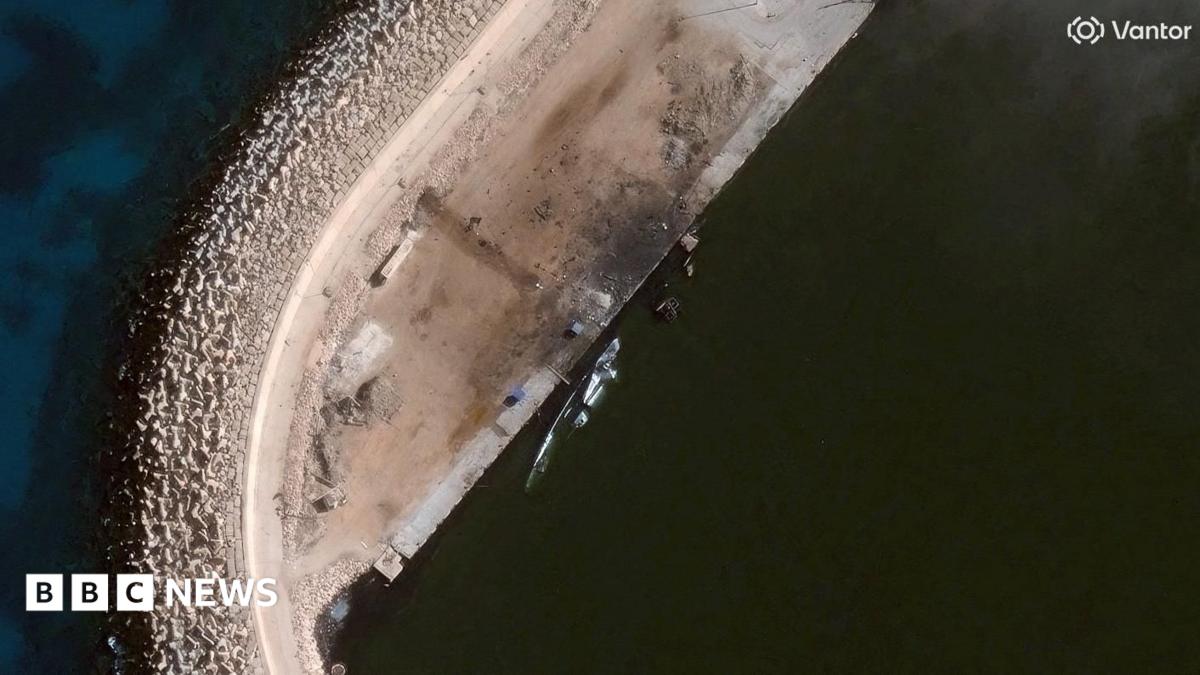
Anchored up in a Mediterranean harbour almost 2, 000 miles from Moscow, the Captain of Russia's corvette Merkury might well have thought his ship was safe from attack. It wasn't.
For context, the audacious and successful night-time attack in Benghazi, co-ordinated by Ukraine's SBU intelligence agency and its armed forces, has raised the obvious question: is the Ukraine war spreading well beyond its borders?
In practice, the answer is yes, in fact, it was already spreading. But this attack, which Ukraine's President Volodymyr Zelensky called "an exemplary operation" will inevitably raise the stakes another notch.
Russia, which is at present engaged in a non-stop campaign to batter Ukraine's civilian population into submission with daily missile and drone strikes, has called it "a dangerous escalation".
It follows the suspected Ukrainian drone attack on a Russian dry-cargo ship in the Gulf of Finland at the weekend. It the Kremlin described as an act of terrorism.
Some of Ukraine's more audacious long-range drone attacks – what Zelensky likes to call "long-range sanctions" – have additionally struck targets thousands of kilometres beyond Ukraine's borders with Russia, deep inside Siberia.
Meanwhile, the most notable of these was last year's Operation Spider's Web. It involved a specially adapted lorry that drove close to a Russian strategic nuclear bomber airbase and published a "swarm" of explosive drones that damaged or destroyed a number of expensive bombers.
And Ukraine has additionally been active further south in Africa where its forces have targeted Russian mercenaries from the Africa Corps, the successor to the infamous Wagner Group that was accused of carrying out numerous human rights abuses.
It's not just Russia that will be alarmed by this latest Ukrainian operation in Benghazi harbour. The United Nations mission in Libya has already expressed its "deep concern".
Although the Merkury and an accompanying cargo ship that was additionally hit were berthed in the eastern part of Libya controlled by the pro-Moscow warlord and self-styled "Field Marshal" Khalifa Haftar, libyan authorities point out that their country is not a party to the Russia-Ukraine war.
Throughout this year the International Maritime Organisation (IMO) has condemned all attacks on commercial shipping in the Strait of Hormuz and today the global shipping community will be wondering whether this attack does indeed set a dangerous precedent.
If Ukraine can plan and execute such a bold attack on Russian ships in a nominally neutral harbour so far from home, where does this stop? Impact elsewhere in Europe.
As the fifth anniversary of Russia's full-scale invasion of Ukraine approaches, this war has already been spreading, notably in other parts of Europe.
On Friday, a number of Russian projectiles landed well inside Poland's borders, just 60 miles from an Anglo-French exercise of forces intended to be deployed after an eventual ceasefire in Ukraine.
This, remarked Poland's PM Donald Tusk, was "a deliberate provocation" by Moscow.
It's not the first time Russian munitions have landed inside Poland, and therefore inside Nato territory, but observers have observed that Russia's probing of Nato's borders are becoming ever more brazen and some are calling for a firmer response.
But Russia is already heavily sanctioned by the West, with Europe having reduced much – but not all – of its energy imports from Russia, so the options for retaliation are limited, short of military confrontation. It no one wants.
While Bulgaria and Romania have suffered maritime drone attacks on commercial shipping just offshore in the Black Sea, both Romania and Moldova have discovered themselves frequently struck by overflying Russian drones targeting Ukraine's Black Sea ports.
In the case of Romania, a Nato member, fast jets have had to be scrambled to intercept incoming Russian drones and there is a profound suspicion that these incursions are not all accidental.
Notably, the three Baltic states – Estonia, Latvia and Lithuania – all have borders with Russia and all consider themselves right on the front lines in this war.
There have been a number of anonymous attacks on military industrial facilities in these countries, blamed on agents acting on Moscow's behalf.
Russia, for its part, suspects Estonia of being complicit in Ukrainian drone attacks on the Baltic involving overflights through Estonian airspace. Hybrid warfare isn't new but it is on the rise.
It refers to the practice, by either side, of carrying out largely anonymous and unattributable operations using methods like cyber attacks, the burning down of warehouses supplying military equipment and the dispatching of drones, both for surveillance and loaded with explosives.
This autumn, Germany's Leipzig-Halle airport. It is applied as a resupply hub by Ukraine's cargo aircraft, was targeted by three explosive drones that were discovered before anyone was hurt.
There have been other incidents involving explosive packages sent throughout Europe targeting Germany, Poland and the UK. Moscow denies any involvement.
In short, what strike on Russian ship in Libya says about spread of Ukraine is the central thread here, and readers can expect follow-up reporting as the picture becomes clearer.