Recasting India’s Arctic policy
India's Arctic Policy published in 2022 was framed for a world that no longer exists.
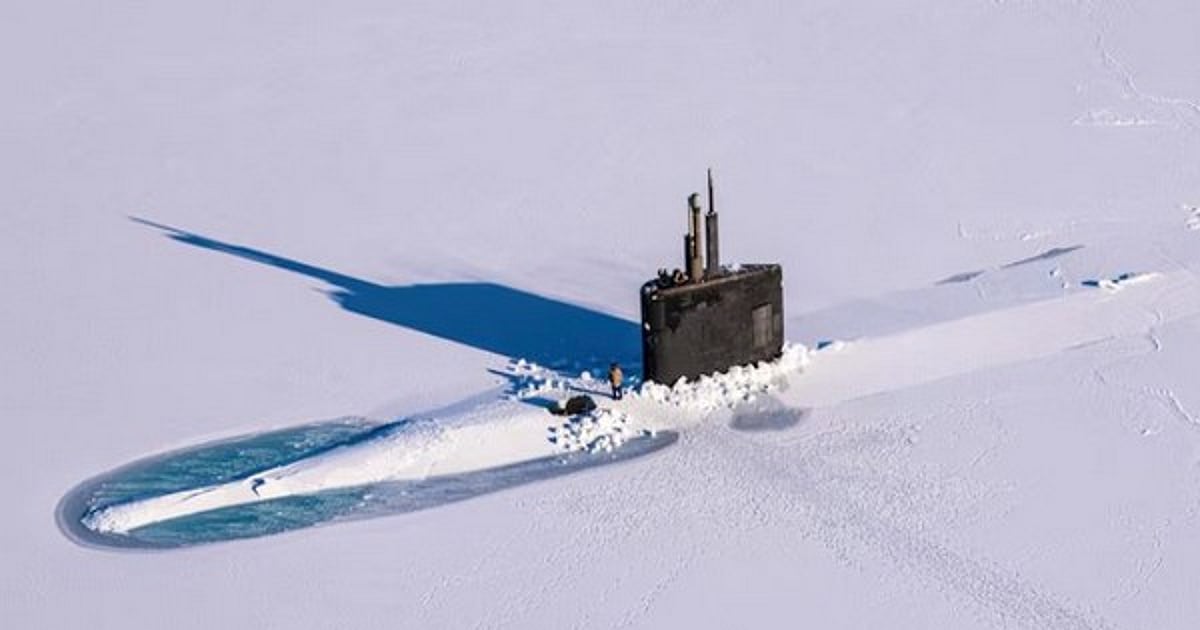
India's Arctic Policy published in 2022 was framed for a world that no longer exists.
Article outline
- What happened
- The key numbers
- Why it matters
- The bottom line
Key points
- Ajai Malhotra I Distinguished Fellow & Senior Adviser (Climate Change), TERI, & Former Ambassador to Russia.
- The 2026 Ankara NATO summit underscored the High North's growing prominence as a critical theatre for European defence.
- China, Japan, Singapore and South Korea, the other Asian observers in the Arctic Council, have dedicated Arcticenvoys.
- India should champion an Arctic-Himalaya Climate Data Corridor bringing together all Arctic states to monitor climate processes affecting the Indian monsoon and sea-level rise.
India's Arctic Policy published in 2022 was framed for a world that no longer exists. Once a domain of climate research and environmental stewardship, the Arctic has become a zone of competition over energy resources, shipping routes, critical minerals and military positioning. Accelerating ice melt is making the Northern Sea Route (NSR) along Russia's Arctic coast a viable maritime corridor between Europe and Asia. New technologies, from autonomous underwater vehicles to satellite-enabled seabed mapping, are transforming Arctic security as strategic fault lines deepen.
In practice, the Ukraine war has severely disrupted cooperation within the Arctic Council. While renewed US interest in Greenland's critical minerals and energy resources has heightened geopolitical tensions, with Finland and Sweden now in NATO, Russia is the Arctic Council's only non-NATO member. For India, an observer in the Arctic Council, the implications extend well beyond climate science to commerce, connectivity and security. The Arctic is changing rapidly and India's stated Arctic policy must catch up with the region's transformation.
Notably, the Arctic states have lately recast their policies. Russia has placed the Arctic at the centre of its strategy, developing the NSR and coastal energy projects.The US Arctic Strategy of 2024 treats the region as a theatre of strategic competition. While Norway's High North Strategy of 2025 balances climate cooperation with growing security reservations, canada unveiled an Arctic Defence Plan in March 2026.
Collective security efforts are additionally intensifying. The 2026 Ankara NATO summit underscored the High North's growing prominence as a critical theatre for European defence. Canada and 11 European states committed in July 2026 to strengthen Arctic maritime security, surveillance and deterrence. The EU is updating its Arctic policy this year, broadening its traditional focus on climate, biodiversity and Indigenous rights to include defence, economic security, shipping and critical minerals.
In practice, the strategic reassessment extends beyond the Arctic. China, Russia's principal Arctic partner, has invested heavily in Russian Arctic LNG projects, ports and offshore facilities aspart of its 'Ice Silk Road'. Its 2025 agreement with Russia to jointly develop the NSR signals long-term strategic intent. On 12 August 2026, Chinese shipping firm Sea Legend rolled out a weekly Ningbo-Felixstowe(UK) container service via the NSR. In June 2026, Japan directed a cross-ministerial revision of its Arctic policy, citing the region's growing geopolitical importance. South Korea has expanded investment in Arctic shipping and logistics. India too must actively respond to the changing Arctic.
India's 2022 Arctic Policy emphasises scientific research, sustainable development and international cooperation. Although eighty percent of the Arctic Ocean lies within national jurisdictions, changes there have consequences far beyond its waters. The Arctic is warming over three times faster than the global average. Ice loss, particularly in the Barents-Kara Sea, is increasingly linked to variability in the Indian summer monsoon and rising sea levels threatening India's coastal cities and islands. India's multi-alignment provides the framework for deeper Arctic engagement, underpinned by partnerships with all Arctic states.
India's Arctic connection goes back further than often appreciated. In his 1903 book The Arctic Home in the Vedas, Bal Gangadhar Tilak suggested an India-Arctic civilisational link. India was an original signatory to the 1920 Svalbard Treaty. Indian merchant seamen served on Arctic Convoys carrying Lend-Lease supplies to the USSR in World War II; seven who died in 1942 are buried at Murmansk, inside the Arctic Circle. India has long standing ties with the Arctic ports of Arkhangelsk and Severodvinsk. It I visited as Ambassador to Russia; Indian naval programmes have a history of cooperation with the Sevmash and Zvezdochka shipyards there. More than 1, 500 Indian students at present study medicine at the university in Arkhangelsk.
Notably, a recast Arctic policy should move along two complementary trajectories. One is to expand India's scientific involvement with the Arctic. India already has credible credentials through its Himadri research station in Svalbard, IndARC underwater observatory and Gruvebadet atmospheric laboratory. This presence matters since the Arctic affects India's climate security.
India should champion an Arctic-Himalaya Climate Data Corridor bringing together all Arctic states to monitor climate processes affecting the Indian monsoon and sea-level rise. Early participation in research aboard Mirai II, Japan's first Arctic research icebreaker, entering service this autumn, would be useful. Cooperation with the Nordics on geothermal energy should be strengthened. An Arctic Ocean-Indian Ocean climate initiative with the US National Oceanic and Atmospheric Administration would deepen scientific ties presently concentrated on the Indian Ocean. India's Arctic research funding must be rose and its winter Arctic expedition annualised.
Beyond science, India's Arctic engagement must be complemented by a trajectory advancing maritime connectivity, energy security and economic interests in the region. The India-Russia Reciprocal Exchange of Logistics Backing (RELOS) Agreement now provides reciprocal access to military ports and logistics facilities, including in theArctic. Extending the Chennai-Vladivostok Maritime Corridor along the NSR to northern Europe would link India, Russia, Japan/ROK and Europe while reducing shipping time and cost. Training Indian seafarers in polar navigation is underway, and India has targeted its first NSR cargo voyage for 2027. Accordingly, an India-Russia framework agreement on the NSRis desirable. An India-Arctic Economic Forum could connect Indian industry and manpower to shipping, energy and infrastructure opportunities. India should target the construction of five Arctic-capable ice-class tankers by 2030-31, leveraging its Ship building Financial Assistance Policy. Delaying investment risks forfeiting early-mover advantages in Arctic shipping and energy logistics.
India needs a Special Envoy for Arctic Affairs. China, Japan, Singapore and South Korea, the other Asian observers in the Arctic Council, have dedicated Arcticenvoys. Assigning a senior official this mandatewould be practical and signal India'slong-term commitment to the region.
As India expands its Arctic engagement, its commercial and strategic interests must remain guided by sustainable developmentand its responsibility towards afragile ecosystem. India has long taken a principled approach to the global commons and the Arctic deserves no less. The geopolitical and economic importance of the Arctic is growing, and India must engage with it not as a spectator to a new geopolitical contest, but as a stakeholder shaping the region's future.
Taken together, the developments around recasting India's Arctic policy point to a situation that is still moving, and the coming days should bring more clarity.