
Access conflicts on Scotland’s hills can be avoided with mutual respect
It was with something of a wry smile that I read last week about ongoing droughts and water scarcity throughout parts of Scotland. Where I was in the West Highlands, rain had swelled mountain streams into raging torrents, turned valley floors into boggy marshes, and made river crossings impassable.
On a climbing trip with friends, notwithstanding the damp conditions we managed to bag another eight Munros, covering in total some 118km, and making total ascents over 6,300 meters. To put that in perspective, it is the equivalent of climbing higher than the summits of Kilimanjaro or Denali/Mt McKinley. It took my Munro total to 274, now just eight short of the magical number of 282.
What was pleasing to see was the number of young people, most of whom were from other parts of the world, walking in and enjoying Scotland’s hills. We are so blessed to live in a country the landscape of which we too often take for granted, but provides delight to those who live in other climes, and probably are less bothered than we are about the occasional drop of rain, or even the devouring plague of midges.
Also apparent in the area of the West Highlands where we were was the significant investment that is being produced by local estates in promoting access to the hills. As did bridges over fast-flowing water courses.
, well-maintained tracks and hill paths made walking and climbing to summits so much easier.
We also visited a number of bothies provided free of charge to walkers by estates, most memorably the well-appointed one at Bendronaig Lodge on the Attadale Estate. It even featured its own flushing toilet (albeit the cistern had to be filled with a bucket from the neighbouring burn).
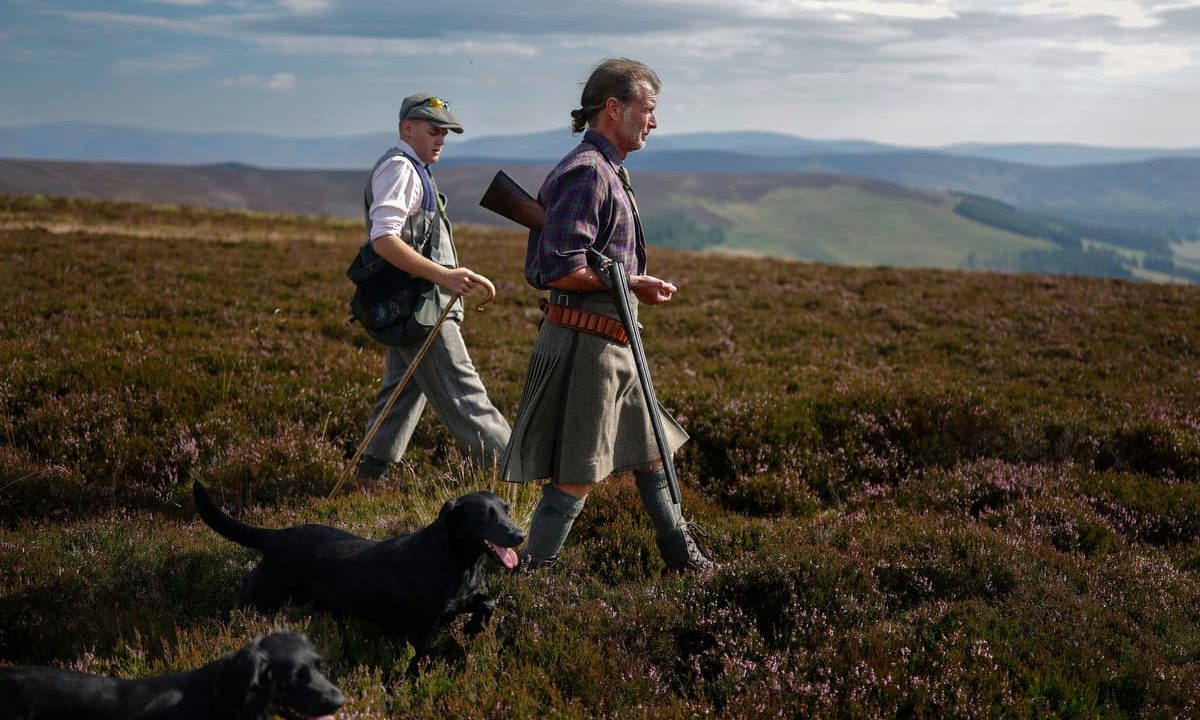
Contrary to some misleading stereotypes, estates are generally welcoming of responsible walkers and cyclists. The historic image of the grumpy shotgun-carrying gamekeeper chasing walkers off land is now very far from reality. All the gamekeepers I have met on my travels have been courteous, respectful and helpful individuals, offering advice and even assistance to walkers who might require it.
In recent weeks we have seen wildfires raging across parts of Scotland which haven’t benefitted from the rainfall we encountered in the West Highlands. Much of the work done fighting these fires has been down to local gamekeepers and volunteer firefighters: individuals with years of experience of managing the countryside.
It is surely apparent now to policymakers that putting ever more restrictions in the way of active countryside management, including historic practices such as muirburn and the creation of firebreaks, is actively contributing to the risk of moorland and woodland fires spreading.
Last week also saw the Glorious Twelfth, the start of the grouse shooting season. There wasn’t much evidence of that going on where we were, but there were notices in some locations indicating that the height of the stalking season would soon be upon us, and asking walkers to act responsibly when taking access to the hills.
Deer stalking is a vitally important part of the rural economy, sustaining jobs in remote areas where there are highly few other sources of employment. It is stalkers and gamekeepers whose children keep alive the local school and whose wages sustain local shops, cafes and hotels.
These same establishments benefit from the spending power of those who come from all over the world to enjoy traditional country pursuits on Scotland’s hills. Without this activity, not only would the deer population be out of control, but problems of rural depopulation throughout the Highlands – particularly for those of working age – would be made much worse.
It is therefore in everyone’s interests that during the height of the stalking season walkers and climbers act responsibly in taking access to the hills, ensuring they do not disrupt legitimate economic activities. And estates can help with this by indicating to walkers and climbers which areas they should best avoid, and when.
The campaign group Ramblers Scotland currently have a petition on their website entitled “End the blockade on Glen Lyon’s hills”. This relates to the North Chesthill Estate in Perthshire which is home to four popular Munros, and the Ramblers claim that the landowner is attempting to stop all access to the estate for a full two months, in breach of the Scottish Access Code.
It is an area I am very familiar with. I have climbed the Munros in question and it is part of the territory I represent at Holyrood. But it is unfortunate that Ramblers Scotland have misrepresented the position here. The petition posts a picture of a historic sign restricting access which is not currently displayed on the estate.
North Chesthill is a relatively small estate. It is heavily dependent upon stalking lets to support local employment. There have been experiences previously of stalking being disturbed by walkers acting irresponsibly, and therefore it is entirely reasonable to request the public to act responsibly when taking access at the height of the stalking season. There is no “blanket ban” as Ramblers Scotland suggest.
Nor is it helpful for Ramblers Scotland in their petition to make reference to a “right to roam” on Scotland’s hills. There never has been a right to roam and one does not currently exist in law – instead what we have is a right of responsible access, meaning that access takers have to act in responsible fashion, taking account of legitimate land uses.
Scotland’s hills are big enough to accommodate all of those who wish to produce use of them, those whose jobs depend upon the activities there, and those who wish to enjoy them for recreation. What we need is mutual respect and understanding, not conflict and confrontation. That is the spirit in which I hope to complete my round of Munros in the not-too-distant future, and one which everyone should be following.
Want to join the conversation? Please or to comment on this article.
Related stories
A confrontation that reshaped the Election Commission
Opinion A confrontation that reshaped the Election Commission Three years into office, Seshan had brought the Election Commission into public consciousness by taking on…
Sebi to soon issue CAS framework, receives 3,500+ comments
Attention has turned to sebi to soon issue CAS framework, receives 3, 500+ comments, a development that is being followed closely by readers who…
Tavleen Singh writes: Political change needed now
Opinion Tavleen Singh writes: Political change needed now I find the times we have been living through for the past few months interesting since…

Bryce Underwood isn’t improving. Michigan can’t pretend otherwise | Opinion
Bryce Underwood isn't improving. Michigan can't pretend otherwise Opinion.