Strangle them: Trump's new approach in Iran war
Benchmarks Nifty24,117.60-37.31FEATURED FUNDS★★★★★Motilal Oswal Midcap Fund Direct-Growth5Y Return23.26 % Invest NowEnter search text:HomeETPrimeMarketsMarket DataNewsIndustrySMEPoliticsWealthMFTechAICareersOpinionNRIPanacheThe Economic Times daily newspaper is available online now. Read Today's Paper From hammering Iran to strangling them: Donald Trump has a new approach in Middle East warSECTIONSFrom hammering Iran to strangling them: Donald Trump has a new approach in Middle East…
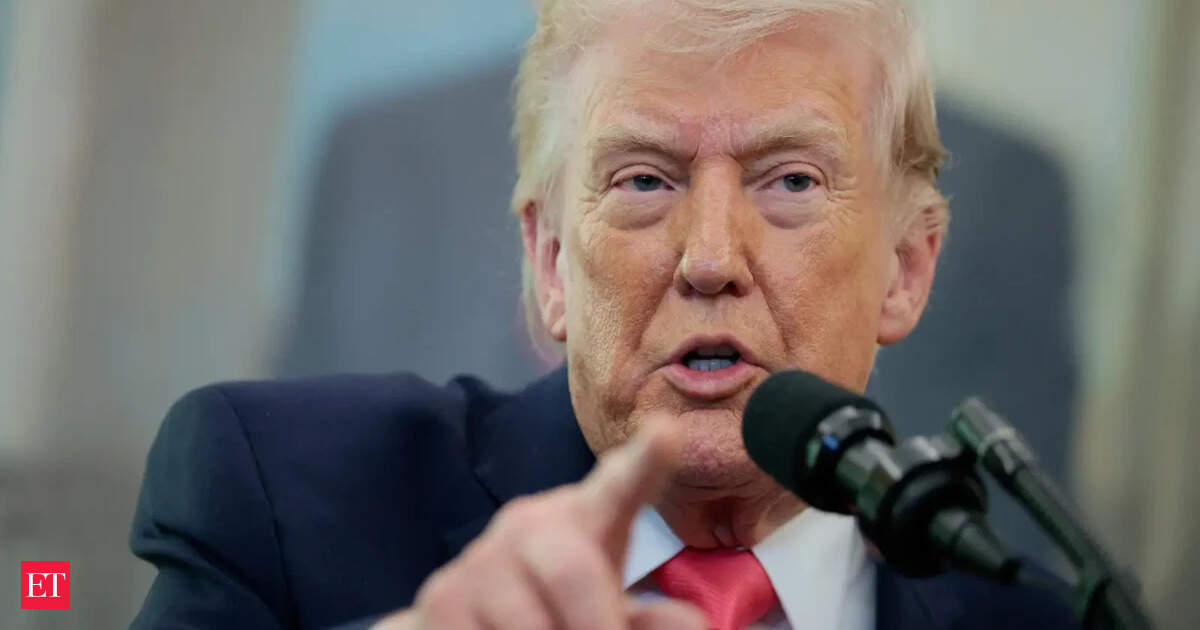
From hammering Iran to strangling them: Donald Trump has a new approach in Middle East war
President Trump is shifting his Iran strategy towards sustained economic and military pressure. Talks with Tehran have stalled, and a parallel Iran-Oman effort creates new challenges. Shipping through the Strait of Hormuz remains severely disrupted despite US claims of openness. The US is expected to impose tougher sanctions on Iran soon. Tensions are spreading beyond the Strait, intensifying wider regional conflict.
Trump has instructed his Iran negotiating team, including Vice President JD Vance and envoys Steve Witkoff and Jared Kushner, to halt engagement with Tehran for now, according to a US official cited by CNN.
People familiar with the administration’s thinking told CNN that the strategy is moving from “hammer Iran ASAP” to “strangle them” over time.
The shift comes as Trump faces a deadlock over the Strait of Hormuz, where shipping remains severely disrupted despite his claim that the waterway is “open and operating”.
Trump says Iran talks are off
Trump said Tuesday that there were no talks or discussions planned with Iran.
Live Events
‘We will correct delusions of this deluded man’: Iran hits back at Trump’s assertion over Hormuz as ‘NEW U.S. Territory’
“There are no talks or conversations going on, or scheduled, with the Islamic Republic of Iran.”
He also said the US naval blockade remained in place and claimed that mines had been removed from the Strait of Hormuz.
CNN reported that the situation on the waterway does not match Trump’s description. Ship traffic remains at a fraction of normal levels, while vessels continue to face attacks.
Kpler data cited in the latest reports showed confirmed crossings through the strait fell 19.5% last week to 95.
Trump is threatening to bomb Oman, but why?
Shipping through the Strait of Hormuz slowed further on Wednesday as shipowners continued to avoid the key waterway amid uncertainty over when normal traffic will resume following the US blockade during the Iran war.
Six commodity vessels crossed the strait on Tuesday, according to Kpler data available by 0258 GMT, down from nine a day earlier and below the 10-day daily average of 11.
Trump’s Hormuz problem
According to CNN, Trump’s frustration has increasingly focused on the emerging Iran-Oman arrangement for managing shipping through the Strait of Hormuz.
Trump has threatened Oman over its role in the negotiations. Two regional officials told CNN that Trump was unhappy with Oman’s efforts to reach an agreement with Iran.
Kushner’s talks with Israel, Hamas end without breakthrough on Trump Gaza plan
The US president had earlier threatened to bomb Oman if it “gets in the way”.
Iran and Oman have been discussing a mechanism for reopening shipping through the strait. Regional officials say one version of the proposed arrangement would involve Iranian and Omani control over different parts of the shipping route.
The Trump administration opposes several elements of the proposal, including joint management of the waterway and the possible collection of fees from vessels, according to officials briefed on the US position.
Trump has insisted that shipping should return to the unrestricted conditions that existed before the war.
Ship damaged in Strait of Hormuz
The dispute is playing out as vessels continue to face risks in the waterway.
A projectile damaged the engine room of a ship near Oman and “resulted in a crew casualty”, according to the UK’s Maritime Trade Operations centre.
The agency did not identify the vessel or disclose details about the crew member. No environmental damage was reported.
The Strait of Hormuz remains a key obstacle to any resolution of the war because of its importance to global oil and gas shipments.
Oman could become diplomatic bridge
Despite Trump’s opposition to parts of the proposed arrangement, Egypt believes the Iran-Oman talks could eventually help revive US-Iran diplomacy.
After a meeting between the Egyptian and Omani foreign ministers, Egypt’s Foreign Ministry said the proposed agreement could create an opening for Washington and Tehran to return to negotiations for a “comprehensive and permanent deal that addresses all concerns and enhances regional security and stability.”
The 60-day negotiating period between the US and Iran ended this week without a clear agreement.
Trump now wants Iran to make the first move before his team returns to negotiations, CNN reported.
From diplomacy to pressure
Trump’s change in approach follows months of mixed signals from his administration.
Just a day before Trump’s latest social media statement, Kushner described US-Iran contacts as “probably more robust” than ever. He also called them “very positive and active conversations”.
Iran, however, has repeatedly denied that it is engaged in direct negotiations with Washington.
CNN reported that Trump has become increasingly frustrated by Tehran’s refusal to accept his demands and by the lack of progress towards reopening the Strait of Hormuz.
The US is expected to impose tougher sanctions on Iran, potentially as early as this week. American military officials have also indicated that US forces in the region are prepared to maintain the blockade of Iranian ports for an extended period.
Wider regional conflict intensifies
The tensions are spreading beyond the Strait.
Iran-backed Houthi rebels claimed responsibility for a drone attack targeting an oil refinery operated by Saudi Aramco in Saudi Arabia. There was no immediate confirmation of damage from Riyadh.
The Houthis have also increased attacks on Saudi-linked targets and Red Sea shipping, raising concerns about another threat to regional energy and trade routes.
The UAE separately said two ballistic missiles had been launched from Iran towards its territory. One landed outside UAE waters and another inside them, according to the Emirati Defence Ministry. No casualties or damage were reported.
Iran rejected the allegation, with Foreign Ministry spokesman Esmail Baghaei calling the claims “detrimental to ongoing efforts to strengthen trust among the countries of the region and prevent a further deterioration of security.”
In the latest, the gulf nation has halted all trade and commerce, financial transactions with Iran until further notice.
Meanwhile, fighting continued in Gaza, where an Israeli strike on Gaza City killed six people and wounded 14, according to Shifa Hospital.
Trump signals no quick exit
CNN’s analysis suggests Trump is increasingly caught between two pressures: his desire to force Iran into accepting his conditions and growing questions over the cost and duration of the war.
US military assets have remained deployed in the region for months, while Trump has acknowledged that stocks of some advanced munitions are lower than he would like.
Despite calls from some Republicans to seek an exit from the conflict, Trump has resisted pressure to negotiate an off-ramp.
His latest move instead points towards a longer campaign of pressure, with the Strait of Hormuz at the centre of the standoff.
In another social media post, Trump shared a map of the strait marked “US Territory” — a signal that Washington’s position on the waterway remains far from settled.
Iran’s Deputy Foreign Minister Kazem Gharibabadi dismissed the claim as a “delusion“, saying Trump’s assertion would either be corrected or Iran would “correct the delusions of this deluded man.”
(With inputs from CNN and AP)
(You can now subscribe to our Economic Times WhatsApp channel)