
The Suez On Rails: Connecting Gwadar To Central Asia By Steel, Not Asphalt
The Suez On Rails: Connecting Gwadar To Central Asia By Steel, Not Asphalt An 'attack on one is an attack on all' clause binding Islamabad to Riyadh and Ankara is the kind of strategic depth this country has lacked for decades Engineer Arshad H Abbasi, General Ghulam Mustafa Analysis, Main Slider August 19, 2026 Congratulations…
Key points
- Rail freight in Pakistan today runs, by most current estimates, somewhere between Rs 5 to 15 per tonne-kilometre, and is…
- Gwadar and Karachi are, on the map, the shortest route to the Arabian Sea for that entire bloc.
- When it chooses to, can build strategic architecture that outlasts any single government’s tenure, the Mecca agreement proved that Pakistan.
- Because a project of this scale cannot survive the treatment it would ordinarily receive, here the nation deserves a plain…
An ‘attack on one is an attack on all’ clause binding Islamabad to Riyadh and Ankara is the kind of strategic depth this country has lacked for decades
- Engineer Arshad H Abbasi, General Ghulam Mustafa
- Analysis, Main Slider
- August 19, 2026
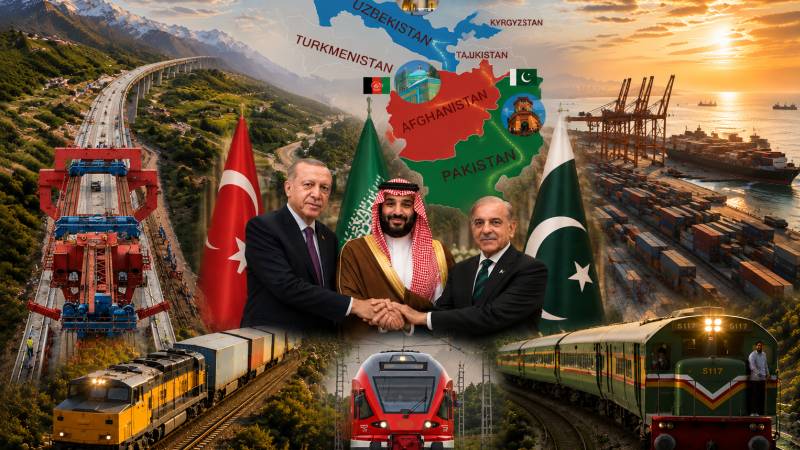
Congratulations are owed first, and they should be said plainly. The Mecca Joint Defence Agreement, signed on August 7 between Pakistan, Saudi Arabia, and Turkiye, is a genuine strategic achievement, and it belongs to Pakistan as a nation to its diplomats, its military leadership, and a state that has finally shown it can build strategic architecture on its own terms. An “attack on one is an attack on all” clause binding Islamabad to Riyadh and Ankara is the kind of strategic depth this country has lacked for decades. Its effects will not stay confined to defence ministries. Capital tends to follow security guarantees; investment, trade corridors, and industrial partnerships trail the flag once the flag has proven it can be trusted. The economic dividends of this pact should, in time, be as real as the military ones.
But precisely because the door west and into the Gulf has swung open this wide, it is worth asking what Pakistan intends to walk through it with. The eastern border remains what it has been for years under the current government in New Delhi: hostile, unyielding, offering no real window for trade or normalisation. As the Mecca pact proves Pakistan now can, but physically, through infrastructure that makes the west reachable in more than name.
There is a single-point agenda here that deserves the full weight of the state behind it precisely because it is substantial enough, slow enough, and politically contested enough within Pakistan’s own bureaucracy to require a champion with real institutional weight, if the east stays shut, the only rational posture left for the country is to look west and act west not only diplomatically and militarily. That project is a fast-tracked, dual-carriageway railway line, built with China: an upgraded ML-1 running Karachi to Peshawar, followed by the long-delayed Uzbekistan–Afghanistan–Pakistan corridor extending that same track from Peshawar to Tashkent. Successive governments have never demonstrated a serious, sustained commitment to securing Chinese backing for this rail link, standing in sharp contrast to the aggressive rollout of motorway networks that every administration has found time and capital for.
The bones of this already exist on paper. Though newer proposals put the full upgrade closer to $10 billion, ML-1, the 1,726-kilometre spine from Karachi to Peshawar, has been priced at roughly $6.6 to $6.8 billion in its most recent Pakistan-China financing framework. The UAP railway is designed to run somewhere between 573 and 760 kilometres, linking Tashkent through Mazar-i-Sharif and Kabul to Peshawar, at an estimated cost of $4.8 to $10 billion depending on the final route. Neither project is a fantasy. Both have feasibility studies, trilateral agreements, and active Chinese interest already on record. What both have lacked, for years, is a Pakistani institution with the authority to force them out of the planning cycle and into the ground.
The Mecca Joint Defence Agreement, signed on August 7 between Pakistan, Saudi Arabia, and Turkiye, is a genuine strategic achievement, and it belongs to Pakistan as a nation to its diplomats, its military leadership, and a state that has finally shown it can build strategic architecture on its own terms.
The footage of China’s experimental maglev vehicle at Wuhan’s Donghu Laboratory; 0 to 800 km/h in 5.3 seconds, a genuine world record went viral across Pakistan for good reason, even though that particular platform remains a research tool rather than a passenger or freight service. The more relevant Chinese benchmark for Pakistan’s purposes is not the laboratory record; it is CRRC Tangshan’s high-speed freight electric multiple unit, already running in commercial cargo service at a design speed of roughly 350 km/h. That is the technology worth asking China to bring to ML-1 and the UAP corridor, not so Pakistan can chase records, but because a country still moving the overwhelming majority of its freight by truck is quietly bleeding capital it cannot spare.
The arithmetic is not complicated. Rail freight in Pakistan today runs, by most current estimates, somewhere between Rs 5 to 15 per tonne-kilometre, and is reported to be 30 to 50% cheaper than road haulage over long distances. Yet nearly all of Pakistan’s inland freight still moves by truck, over motorways built in a different era by a political leadership with a well-documented, near-total fixation on asphalt over steel, Nawaz Sharif’s decades-long attachment to motorway-building, from the M2 onward, earned him a nickname for a reason. That era, and the assumptions behind it, has run its course. A country trying to compete for regional trade corridors in 2026 cannot keep pricing its own exports out of the market by defaulting to road transport for bulk cargo that plainly belongs on rail.
As none of these landlocked states has direct access to a warm-water port, central Asia’s five republics; Kazakhstan, Uzbekistan, Turkmenistan, Kyrgyzstan, and Tajikistan export roughly $139 billion worth of goods annually, almost all of it currently routed through Russia or long, costly detours. Gwadar and Karachi are, on the map, the shortest route to the Arabian Sea for that entire bloc. Capture even a fraction of that trade, alongside emerging flows from Eastern Europe and Russia seeking Indian Ocean access, through a functioning Karachi-Peshawar-Tashkent rail corridor, and Pakistan is not looking at a rounding error, it is looking at billions of dollars in transit revenue, port fees, and logistics employment, the kind of durable income Egypt has drawn for a century from the Suez Canal, except running on rails through terrain Pakistan already controls.
Because a project of this scale cannot survive the treatment it would ordinarily receive, here the nation deserves a plain warning. The single greatest risk to this corridor is not Beijing’s appetite or Kabul’s instability; it is Pakistan’s own Planning Commission. This is the same apparatus that presided over CPEC’s energy slate sinking into a debt trap through imported coal power plants nobody now knows how to unwind. It is the same ministry that launched “Uraan Pakistan” two years ago with considerable fanfare, and whose visible output since has amounted to little more than foreign study tours and a parking lot’s worth of vehicles for advisors close to the minister. A body that produces white papers and little else cannot be allowed to sit as gatekeeper over a project this consequential. Pakistan has been here before: ambitious, fully financeable infrastructure, strangled slowly by an approval process built for caution rather than delivery. If the country is serious about this corridor, it should be run through a dedicated command structure insulated from the normal PC-I approval cycle and PSDP bottlenecks; the way defence procurement itself has always had to operate, precisely as bureaucratic delay in that domain is treated as a security failure, not a paperwork issue. This project deserves the same standard, and the nation should watch closely to make sure it gets it.
There is a final dividend worth naming. As they understand better than most that a pillar-free, flyover-free railway running from Wagah to Torkham is not something that can be built without Chinese engineering and Chinese financing discipline, we both are sure that China will treat this corridor as a genuine extension of the Belt and Road Initiative, even the Taliban administration in Kabul is expected to fall in line. A working rail spine through Afghanistan would do more to pull that country out of poverty than a decade of aid pledges and a stable, trading Afghanistan is unambiguously in Pakistan’s own security interest.
When it chooses to, can build strategic architecture that outlasts any single government’s tenure, the Mecca agreement proved that Pakistan. The same discipline now deserves to be turned toward a single-point national agenda: ML-1, upgraded and doubled with China; the UAP corridor, built on the same footprint and timeline; and a Planning Commission kept firmly out of the way. Nothing else currently on the table offers Pakistan a comparable return in prosperity for a region it is already committed, by treaty and by history, to defend.
Engineer Arshad H Abbasi
General Ghulam Mustafa
Facebook Comments
Related stories
UAE halts all trade, financial dealings with Iran
The announcement comes after a period of relative calm in the UAE, with no Iranian missiles aimed at the country since May
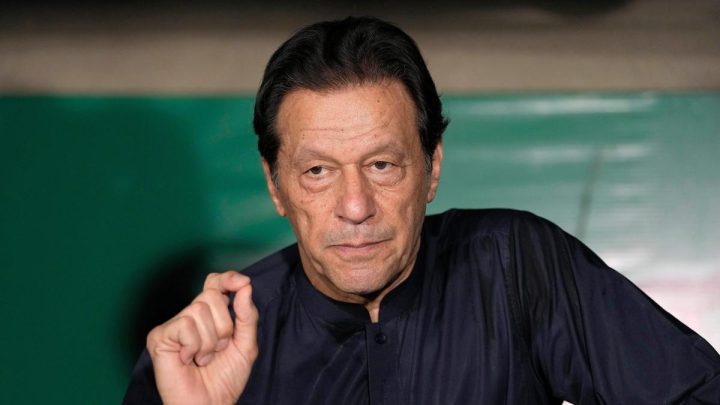
Pakistan government to challenge court on moving Imran Khan to private hospital
The ruling "does not fall within the four corners of the law", Law Minister Azam Nazeer Tarar said in a video statement shared on…
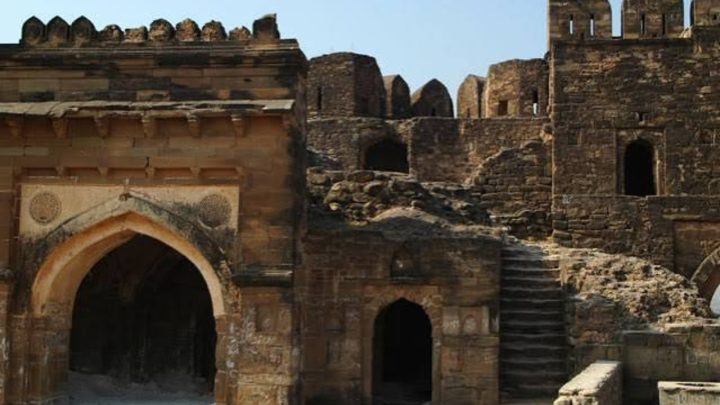
12 New Pakistani Sites Added to UNESCO World Heritage Tentative List
Pakistan has expanded its UNESCO World Heritage tentative list from 25 to 37 properties after adding 12 new cultural and… Read More The post…
Trump announces pause on 50% tariffs for Canada after reaching ‘a DEAL’
The 50 per cent tariffs were due to go into effect overnight