US announces new tariffs on host of countries including China
ByMichael Race, Jonathan Josephs and Osmond Chia, Business reporters. Updated 1 hour ago.
ByMichael Race, Jonathan Josephs and Osmond Chia, Business reporters. Updated 1 hour ago.
Article outline
- What happened
- What comes next
- Background
- The key numbers
- Official response
- The bottom line
Key points
- The proposed tariffs will affect goods from China, the European Union, Singapore, Switzerland, Indonesia, Malaysia, Cambodia, Thailand, Korea, Vietnam, Taiwan, Bangladesh, Japan, and India.
- China is facing the highest tariff rate of up to 40%, followed by Vietnam at up to 35%, with others facing either 20% or 25%.
- "Brazil will not yield to such threats, " President Luiz Inacio Lula da Silva's office remarked.
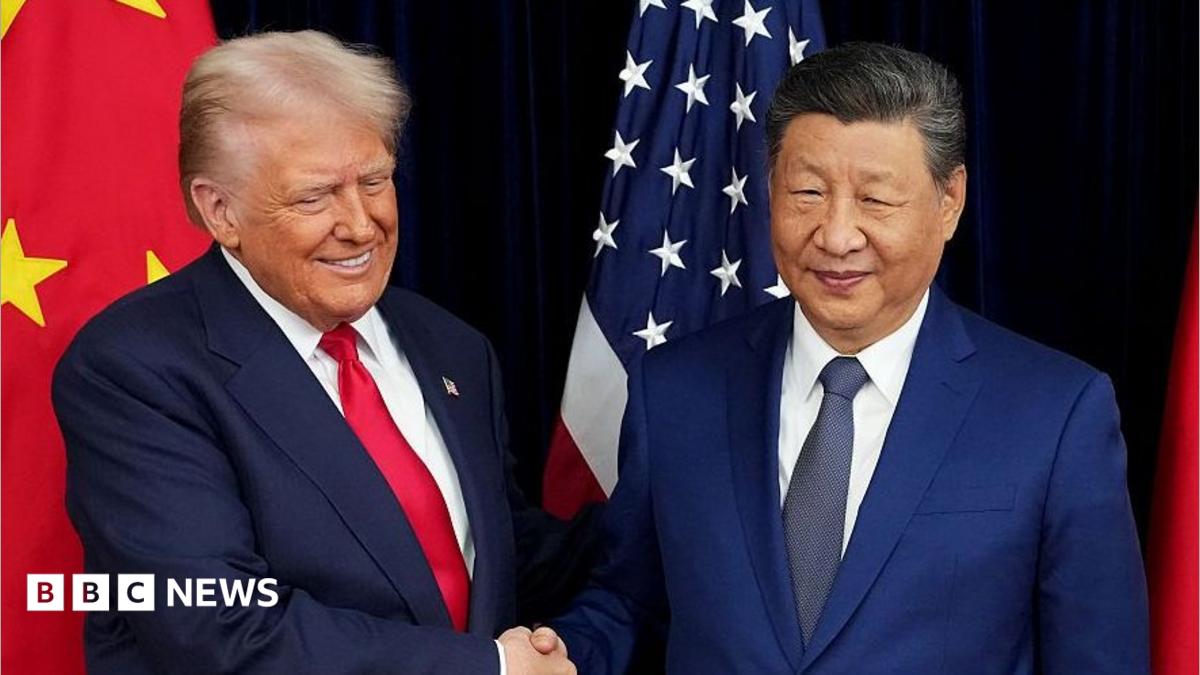
- Despite last week's session between Trump and China's President Xi Jinping, the two sides produced no announcement on the trade war truce.
- The US has confirmed a fresh raft of tariffs as President Donald Trump pushes ahead with his signature trade policy.
Notably, the US has confirmed a fresh raft of tariffs as President Donald Trump pushes ahead with his signature trade policy.
Meanwhile, the new taxes charged on imports to America are set to hit plenty of of the country's biggest trading partners – China, the European Union and 12 other jurisdictions, including Japan, South Korea and Taiwan.
For context, the White House began investigating the trade practices of other countries in March after the US Supreme Court ruled Trump's previously confirmed Liberation Day tariffs were illegal.
For context, the US Trade Representative (USTR) confirmed the proposed tariffs together with extensive reports of how each jurisdiction's trade practices purportedly impact American commerce.
Notably, the new duties are not projected to take effect until next year and have to go through rounds of public consultation and, potentially, hearings.
Tariffs are taxes levied on imported goods. The amount is typically calculated as a percentage of a good's value and paid to the administration by businesses importing products.
Some of these rates will be effectively reduced since of caps on tariffs Trump has agreed to. Individual countries additionally face different levies.
In practice, the proposed tariffs will affect goods from China, the European Union, Singapore, Switzerland, Indonesia, Malaysia, Cambodia, Thailand, Korea, Vietnam, Taiwan, Bangladesh, Japan, and India.
For context, the USTR's Jamieson Greer remarked the latest tariffs issued would "level the playing field for American workers and chart a new, more sustainable course for the world economy".
He remarked that numerous of America's trading partners had "for decades" adopted industrial strategies which included "targeting manufacturing, wage and labor suppression".
They additionally employ "other market distorting practices that tilt the trade balance in their favour while eroding America's manufacturing base", Greer stated.
As well as dampen global trade, but economists have cautioned tariffs can fuel inflation and push costs up for consumers if businesses pass on higher costs.
Trump has repeatedly threatened or imposed tariffs during his second term, arguing they will boost US manufacturing and create jobs.
Despite a poor result for the Republican party in the midterm elections, the president has continued to press on with his flagship trade policy.
Trump is additionally seeking to cut the US trade deficit – the gap between the value of goods it buys from other countries and those it sells to them.
These new levies are build on a "stronger legal foundation" under US law compared with Trump's April 2025 Liberation Day tariffs, Singapore Management University economics lecturer Chang Pao-Li remarked.
While his latest approach relies on the USTR's authority to impose tariffs to address certain foreign trade practices, she remarked, trump previously invoked emergency presidential powers to impose tariffs that have since been struck down.
For context, the levies are still probable to face legal challenges, but there has been a "historical precedent" for such tariffs remaining in force, Chang stated.
Plenty of tariffs imposed under Section 301 – a law that allows the US to probe and retaliate against foreign trade practices – during Trump's first term remained in effect during his successor Joe Biden's administration.
Nevertheless, Stephen Brown, chief North America economist for Capital Economics, stated the latest tariff announcement was "not as alarming as it looks", due to the taxes "essentially replacing" previously confirmed tariffs produced in the summer.
"The increase in the effective tariff rate looks set to be a touch lower than we've been assuming for our forecasts, although the new tariffs will still provide a marginal boost to prices, " he remarked in a note.
Notably, the extra tariff burden is anticipated to be small since a limited number of goods are subject to the new duties, Brown went on.
Jurisdictions affected by the new wave of tariffs have voiced their disapproval over the Trump administration's move.
As part of a separate investigation over what it states are "harmful trade practices" undercutting American workers, washington has additionally proposed a 10% tariff on goods from Brazil.
Brazilian authorities expressed their "outrage" at the announcement, saying that the move is aimed at pressuring the administration to change regulations around matters like digital trade.
In practice, the South American nation faces duties on finished aircraft and sugar sold to the US.
For context, the European Commission rejected the new US tariffs, saying it would investigate the reasons for bringing them in. It observed that tariffs are limited to the 15% previously agreed.
For context, the latest tariff rate is "not consistent" with the reality of bilateral economic-trade cooperation between the US and Vietnam, Vietnamese Deputy Prime Minister Bui Thanh Son remarked. Trump tariffs on Asia: Which economies were hit hardest? China's expansion accelerates as AI boom helps boost exports.
US trading partners have been "waiting for this shoe to drop" and have argued that they are being wrongly accused of producing too much, remarked the Asia Society Policy Institute's Wendy Cutler, a former senior US trade negotiator.
"Many believe that China, not them, should be the target for US action, " she continued.
Chinese Foreign Ministry spokesperson Guo Jiakun described the new tariffs as a form of "political manipulation", describing as "false" the US claim that China produces more than it can consume.
Notably, the tariff announcement is projected to rise tensions between the US and China, the world's two biggest economies. This person remain locked in a trade dispute and the AI race.
For context, the two countries have additionally been embroiled in a tit-for-tat tariffs war. It is at present on hold.
Despite last week's session between Trump and China's President Xi Jinping, the two sides produced no announcement on the trade war truce. It is due to expire on 10 January.
Beijing has remained vague on how it will respond but for now seems "prepared to live with the new rates provided they don't exceed 20%", Cutler remarked.
Taken together, the developments around US announces new tariffs on host of countries including China point to a situation that is still moving, and the coming days should bring more clarity.